Showing posts with label magickal name. Show all posts

Monday, August 13, 2012

The Story of ᚺᛖᛁᛞ

A poem (among many) I wrote over a  decade ago describing one of my first experiences into existence (as a projection from what I now identify as the collective Divine Folksoul to which I belong):

Divisions of the Night

first rhythms ever plunge, eternal hosts driven into life
drawing through a field of topographic brilliance
where judgment lovingly flows, churning out whole stones
resting against asymmetries trying, like diamonds in chaos
proto-perception foams, over annihilating operations
and from it, dark bursts of lucidity finely entwine
coarse grains of almost something, almost yet sufficient
the silent rush of yet nothing slides, wildly as percolating pivots
diligently thread through it, casting clarity
upon myriads, hard pauses startle into vision
projecting arrays without mass, strings of confluency
impressing discovery, a shadowy tail-end lingers
between depths of opposite observation
iterating embraces of many meanings like quasi-quanta
gathering functions about the head and, and
spinning spectra, pushing forward, yearning toward home
not knowing, yet only knowing
as some featureless reach edging edges stretches out
the magnetic sweet dance
where divisions collapse like crystal caves
softly sprinkling the belly of the night divine
with bytes of thoughtbare kisses
extending the glorious field of apprehension

Interestingly, my preincarnate memories (some of which I have written about on this blog over the years) are significant to my Sacred Name ᚺᛖᛁᛞ (Heid) as revealed to me by my Patroness, Frau Holle, and discussed by Kate Gerrard in Seidr, the Gate is Open:

(In Voluspa) the name is translated as 'bright one' and within the stanza, Heid, the prophetess is telling her story. She starts her tale before this point "as far back as it is possible to go" with the story of creation. This allows us to understand that she has access to information that forms the very existence of the universe and is beyond the capabilities of her mortal life to be in memory of. Another theory, of course, is that the prophetess is older than time and is therefore seen by Odin and by mankind as immortal, ever present and ever knowing.

As the Ancestors are timeless and immortal, so too is the immortal Heid an active remembering extension of the Ancestors into mortal Being.

ᚺᛖᛁᛞ in the Anglo-Saxon Rune Poem:


Hail is the whitest of grain;
it is whirled from the vault of heaven
and is tossed about by gusts of wind
and then it melts into water.

 ᛖ

The horse is a joy to princes in the presence of warriors.
A steed in the pride of its hoofs,when rich men on horseback bandy words about it;
and it is ever a source of comfort to the restless.


Ice is very cold and immeasurably slippery;
it glistens as clear as glass and most like to gems;
it is a floor wrought by the frost, fair to look upon.

 ᛞ

Day, the glorious light of the Creator, is sent by the Lord (Divine Ancestor);
it is beloved of men, a source of hope and happiness to rich and poor,
and of service to all.

ᚺᛖᛁᛞ

Monday, July 09, 2012

My Saami Name is Čielgat-Čiegusvuoht

Blessed be my Patroness Hel! She has led me to my Saami sacred name ~ Čielgat-Čiegusvuohta ~ it means to MAKE CLEAR, to clarify and to elucidate THE SECRET (ways of my ancestors as they live through me). My Saami name is in harmony with my other names: Lori (birth/English), Liorah (Hebrew), Lleucu (Celtic) and Heid (Teutonic) - all of my names pertain to bringing forth enlightenment. My Saami name is Čielgat-Čiegusvuohta. Right now, I feel like a many-layered onion with all these names, where my birth name is the outermost skin on the onion which is me.

Thursday, May 24, 2012

Teutonic Patroness and Sacred Witch Name

In follow-up to my dream post and my synchronous stumbling upon this video, it clear to me that my Scandinavian patroness is revealing herself! Teutonic FRAU HOLLE is the ancient mother witch goddess of the Teutons. This artistic image shows her with a crown of candles on her head. Along with finding the ancestral patroness of my magickal candle crafting, I have claimed my Teutonic sacred witch name. It is Lorilla, the Teutonic version of my actual birth name. My Teutonic name describes my personality exactly:

Meaning: Elfin Laura.

Soul Urge: People with the name Lorilla have a deep inner need for quiet, and a desire to understand and analyze the world they live in, and to learn the deeper truths.

Expression: People with the name Lorilla are excellent at analyzing, understanding, and learning. They tend to be mystics, philosophers, scholars, and teachers. Because they live so much in the mind, they tend to be quiet and introspective, and are usually introverts. When presented with issues, they will see the larger picture. Their solitary thoughtfulness and analysis of people and world events may make them seem aloof, and sometimes even melancholy.

The candle I create for my patroness is going to be something very very special.

Sunday, August 16, 2009

Rune Of Shabbat Rest

כ"ו באב תשס״ט
Lughnasadh 27

There are seven runes and one 'empty space' in my runic name. The seven runes of my name shall correspond in my life to the seven days of the week.

As Odin is the chief Divinity in Germanic tradition who guides souls, mediating between the conscious and unconscious realms, so too shall Odin's day (Wednesday) guide the week in my runic practice. Thus, the first rune in my name corresponds to Wednesday, the second rune to Thursday, the third rune to Friday, the fourth rune to Shabbat ... the fifth rune to Sunday, the sixth rune to Monday and the seventh rune to Tuesday.


Interestingly, under Odin's guidance, the fourth rune in my name corresponds to Shabbat, the Jewish Sabbath day of rest. The fourth rune in my name is also the rune of rest, namely Isa. Beside Isa, rests the empty space in which the Soul of Shabbat Consciousness is pulled into manifest existence.

All my Ancestors and the mysteries of the magical alphabets I've inherited from them are in harmony within me. Peaceful and full of well-being is my inheritance. It is כל טוב, all good.

Journey Of A Runemaster

כ"ו באב תשס״ט
Lughnasadh 27

My personal birth name Lori Ann in Elder Futhark runes is spelled:


laguz-ansuz-raidho-isa, ansuz-nauthiz-nauthiz

One magical translation of my Runic Name is:

Laguz [praise-worthy one] - the layered lög (Law) of life, passage and initiation, growth, gathering of magical power and vital force, power of renewal. Through this rune I the runemaster am reintegrated into my primeval Ancestral Clan(s), guided life to life, initiated into the Ancient Dynamic Mysteries of Meta-Language, and embody the power of Synthetic Consciousness.

Ansuz [firm foundation] - receiver, vessel, transformer and expresser of Ancestral mysteries, tradition, wisdom and knowledge. Through this rune I the runemaster take my place as One among the Divine Ancestors, and do embody a living link in an unbroken chain of esoteric transmission of magical tradition.

Raidho [wholiness] - Divine Law Consciousness and innate instinctual order of wholiness. Through this rune I the runemaster dance - reckoning, balancing and harmonizing All and Nothing according to the Law of Wholiness with purpose, justice, and right action.

Isa [stillness] - the rune of rest, the mystery of cosmic stillness, connection and concentration. Through this rune I the runemaster possess unity of purpose and being, bridge worlds and bond elements and energies of the cosmos into a tapestry of wholistic beauty.

Ansuz [understanding] - mystery of Priestess consciousness, the mystical intelligence which brings together and synthesizes disparate elements of the Ancestral Ways in order to bring forth and achieve Understanding and Divine Consciousness. Through this rune I the runemaster function in my place as One among the Divine Ancestors embodying a living link in an unbroken chain of esoteric transmission of magical tradition.

Nauthiz [step forth into manifestation] - mystery of Need and Intelligent Darkness, determination and endurance. Through this rune I the runemaster embody the resistance necessary to call forth deliverance and all that is needed.

Nauthiz [to make with will-directed action] - mystery of the Need-Fire and Deliverance, the Intelligent Light of Awareness kindled and discovered through resistance, birthing innovation. With this rune I the runemaster call forth, create, direct, form, make and deliver All that is needed.

Saturday, August 23, 2008

The King's Children, Ring Of The Interstellar Ark


The Wild Swans & Princess Elisa from Interstellar Ark in description of the corolla of a vast ring

כ"ב אב התשס"ח
Lughnasadh 23

I am pleased to report the plot (from Wikipedia) of a fairy tale my friend Herbalpagan brought to my attention today called The Wild Swans, about twelve siblings - the holy (whole) witch, wise prophetess Princess Elisa (who foils the dastardly plan of an Evil Witch), and her eleven princely brothers (who foil the dastardly plan of an Evil Archbishop):

In a faraway kingdom, there lives a King with his twelve children: eleven princes and one princess. One day, he decides to remarry. He marries a wicked Queen who is actually a witch. Out of spite, the queen turns her eleven stepsons into swans and forces them to fly away. They carry their fifteen year old sister Elisa to safety in a foreign land where she is out of harms way of her stepmother. There, Elisa labors mutely day and night knitting magic shirts from nettles to help her brothers regain their human shapes, as this is the only way to break the spell their stepmother forced them under. The king of another faraway land happens to come across the mute Elisa and falls in love with her. He grants her a room in the castle where she continues her knitting and eventually crowns her as his Queen and wife. One night Elisa runs out of nettles and is forced to collect more in a graveyard. She is spotted by the evil Archbishop who is looking for an excuse to accuse her of witchcraft. He convinces the King that Elisa is a witch and sentences her to death by burning at the stake. At the place of execution, the swans descend and rescue Elisa. The magic shirts are donned and the brothers return to their human forms. Elisa regains her voice and explains the reason for her mysterious work to the king. Elisa's courage prevails and she is forever reunited with her brothers.

Related information on my mystical Hebrew name (also part of my Craft name) -
Liorah Chanah Elishaba Tsabrah bat Ahuvyah v'Adar
Fire In The Sky

Related entries -
Protective Power Of Unity In Plurality
The Three-Fold Cord At Dawn
The Inverted Seal

Sunday, July 20, 2008

With Six Letters, Three Cauldrons Of One Torah

י"ז תמוז התשס"ח
Faunus 19


Scribal oddity of two 'n's as found in Torah scroll (shown aove).

The Celtic Ogham alphabet of the Druids is called Beth-Luis-Nuin. Through designating the Ogham alphabet beth-luis-nuin, in some manner then, the three letters (beth, luis, nuin) call out the soul of the Ogham into active creative manifestation. In other words, the letters symbolize the three creative rays of Awen, and the creative energy of the Divine Feminine known in kabbalah as hashra'ah.

From the perspective of a Jewitch, beth-luis-nuin have correspondences to the Hebrew letters Beit-Lamed-Nun. In Torah, beit-lamed-nun symbolize the soul of Torah.

Beit-Beth, with a 'b' sound, is the first letter (בְּ) of the first word 'bereshit' (בְּרֵאשִׁית) in the first book of Torah, Genesis (called in Jewish tradition 'Bereshit'). The six letters of the word 'bereshit' can mean 'with six'.

Lamed-Luis, with an 'l' sound, is the last letter (ל) in the last word 'Yisrael' (יִשְׂרָאֵל) in the last book of Torah, Devarim (Deutereonomy). The word "Yisrael' is a mystical codeword for the collective soul of humanity to whom Torah belongs. 'Torah' is a mystical codeword for the 'keys to creative messianic consciousness'.

In the Hebrew language, the letters lamed-beit spell the word לב, pronounced 'lev' (a hard beit is pronounced 'v', a soft beit is pronounced 'b'), a word meaning 'heart'. The 'heart' of Torah, comprising the soul of Torah, symbolizing the entire Torah, from the last letter to the first letter, the alpha and the omega, speaks forth the realization of humankind's messianic potential and inherent Divinity.

Nun-Nuin. The messianic and Divine consciousness of humankind is symbolized by the 'n' sound, represented actively by the Hebrew letter nun and the Ogham letter nuin.

Two letters with the 'n' sound comprise a significant and unique scribal oddity found in Torah. The two odd 'n's are called nun hafucha (inverted nun, like an introspective 'n' among the Hebrew alphabet) and nun m'zuneret (isolated nun, like the 'n' among the Ogham alphabet set apart from the Hebrew alphabet). Between the two n's are set apart two verses (Numbers 10:35-36) within the midst of the entire Torah. The two verses are said to comprise a link to an entirely new inner arrangement within Torah, one which will be revealed during the golden age of messianic consiousness among humankind.

Taken together, with six letters from both the Hebrew and Ogham alphabets, are three cauldrons of Torah creation letters called forth. Brewing within the three cauldrons of Torah creation letters is the birthright of humankind - Divine messianic consciousness.

Six Letters, Three Cauldrons, Two Alphabets, One Torah

The heart of Torah is the heart of the Ogham. Hebrew and Ogham (shefifon) are elucidations of the same root soul (serayah) of the Divine soul of humanity.

With six letters (beth, beit, luis, lamed, nuin, nun), through three cauldrons (of emanation, creation and formation) is the entire atzilutic-messianic Torah called forth and made manifest.

Saturday, October 06, 2007

Ani Vahu - Shem Vayisa Vayet

כ'ד בתשרי תשס"ח

זאת, אז, is the sod of what Chazal wrote: “Michael in one . . . Eliyahu in four” (Brochos 4b). Understand this.

I dreamt a single dream expressed through 4 revealed parts and 1 touching yet not touching part. Understand this.

Part 1. Hu'alam. אתהפכא חשוכא לנהורא

Hidden. On the verge of awareness. At the threshold. Almost. Inside out, outside in. Over the edge into perception.

Part 2. House. Elishaba (אלישבע).

My "husband" and I with our 3 children (beriyah, yetzirah, assiyah) were looking to buy a house to live in. We had just come through some hard financial times. We didn't have any good credit rating built up, so we had little hope that anyone would sell us a house "on time". My husband remembered his friend whom he thought would surely sell us a house. We journeyed (ויסע) to find my husband's friend.

We went up the small bare porch to the door of my husband's friend's trailer, from where he engaged in the business of selling houses. I was holding our baby sleeping soundly in a swaddling blanket. My husband knocked on the door. The friend's wife answered the door, then went to get her husband while we stood on the small porch. Her husband came to the door, spoke in words I could not hear with my husband, slipped a notepaper into my husband's hand, and shut the door on us. My husband indicated to me we should leave. I was perplexed as to why we were leaving abruptly without conducting the business of buying a house.

My husband's friend opened the door, came outside and walked toward us as we were walking toward our red pickup truck. My husband was near the driver's side door of the truck. I was approaching my side door to it. My husband's "friend" approached me. He wanted me to leave my husband for him. I was appalled at the suggestion that I should leave my husband and rebuffed him. He turned and went back inside the trailer. I looked at my husband, we looked at one another (ani vahu) over the roof the red pickup truck as we both stood in front of our respective doors. I had no intention of ever leaving him. We got inside the pickup truck at the same time.

My husband brought out (ויבא) and handed me the notepaper his friend had given him explaining to my husband why he wouldn't sell us a house. The notepaper told my husband "I am in love with your wife." The message had been transmitted from my husband's friend, into the hand of my husband (who read it as he did), into my hand (where it remained folded for safekeeping and unread). [As I write this, it occurs to me that there is more to the "essential message" I received from my husband's hand for safekeeping than meets the eye.]

We were on our own with regard to getting a house. His friend would not sell us a house (ב). We would have to get one ourselves, some other way.

Part 3. Out Of The Mouths Of Babes

The baby my husband and I had was as yet unformed. It had an inverted mouth (chotam hamithapech) with projecting extensions (makeef hakarov, mazon, levush, bayit). Miraculously however, and to the amazement of everyone, our still as-yet unformed baby could talk using the vibrating extensions (ויט) which radiated like cords from it's mouth. Not only could our baby talk in this world, but it talked of and demonstrated an exquisitely brilliant understanding of extremely advanced and complex topics - topics as yet not understood by the most brilliant minds in the world. The truth in our baby's words was recognized by the greatest minds in the world, but the fullness of understanding they did not yet possess. Our baby was an anomaly of brilliance possessing the keys to advancing understanding throughout the entire world.

Our baby discoursed upon space, time, spacetime, how to reverse and move time, and such things in ways no scientist had yet accomplished. Scientists listening to our baby speak discussed among themselves the idea that many thought time could be changed, but no one had actually done it yet. They discussed the impact our baby's words would one day have on advancing knowledge and human development. If they could only understand that being transmitted through our baby more fully, they could make the thoughts of changing time a reality. They waited with anticipation for the day our baby would "form" - to bring down the details needed to accomplish all the wondrous things our baby spoke of.

Part 4. Cloak Of Many Colors

I observed two women, one was powerful and the other walking behind her was her assistant. In a fall festival fair-like environment, a handsome man with long hair (like Samson) came to tempt and bring down the powerful woman, but she was not tempted. The woman's assistant, however, was tempted and went with the handsome man to his place and slept with him. There was no love in this joining. It was purely sexual. The assistant didn't care. Neither did the handsome man. I didn't see the two together, but when they came out of his bedroom together, I saw that he had given her a colorful silky nightcloak. As the man went into the kitchen to fix some food, the assistant used the telephone to call the powerful woman. The assistant "gloated" sweetly to the powerful woman how she herself now had what the powerful woman "should have" had. My feeling was that the powerful woman was nonplussed by the assistant's call. In other words, the powerful woman had not been tempted nor was she "stricken" (the assistant's intent) by the assistant's assertion that the assistant now had something which "should have" gone to the powerful woman. The assistant was gloating in vain. The assistant was the one unable to control her impulses, not the powerful woman. In observing all this, in my mind were the thoughts that the man was intervening in a situation to defend me and that he was a Druid. He was also a friend of my husband. And while the assistant felt she (in the place of the powerful woman) had had the powerful yet totally sexual encounter and had obtained the gift of a beautiful cloak, I knew, by the way she was gloating in vain, that the assistant was clueless as to what the solely sexual experience and the colorful silky cloak brought with them. She wouldn't be gloating soon.

Part 5. Michael Splits The Water

I was with many people playing in the water (מ) of a sea or large river. Suddenly, "in yet behind" the "watery" sky over the watery water, a hole like a wormhole in spacetime appeared. It was separated thinly from the rest of the watery world (ו, made of both the waterywater and the waterysky, seamlessly unbroken) of the dream by a thin sheer veil. Something had emerged from beyond into the watery world. We all backed away from the hole so as not to be sucked up into it or collide with whatever was going to come through it into our watery world.

I looked and saw. A huge movement came through, traveled under the surface of the water and onto the beach, also under the sand. Then, a huge worm-like slug-like whale-sized creature emerged. (It brings to mind a combination of shamir and livyatan.) A Voice in the atmosphere beside me informed me that more like it would be coming. They would invade and settle my planet.

I had to decide what to do about the creature. Was it friend or foe? Did I want this creature here or not? I had to decide what to do. If I did nothing and allowed it to remain, more would come. I just looked at it. I wanted to figure it out before doing anything. I was curious about it. So, rather than do nothing or anything ...

I woke up, doing both in one action.

Vayavo (ויבא) has a gematria of 19, the same as Chavah (חוה). In my dream, I did not unfold the note given to me by my husband. Unfolding the note in a dream, corresponds to eating from the Tree of Knowledge prematurely. I waited, holding the folded message for safekeeping.

ואין חכמה אלא ברכה שנאמר ויברך אלהים את שלמה וכתיב וה' נתן חכמה לשלמה
Sefer HaBahir, verse 3 excerpt

Friday, October 05, 2007

Fire In The Sky

כ'ד בתשרי תשס"ח

Driving to work this morning on the interstate heading east, the sky was full of grey clouds. Yet, for a few minutes, 3 sunbeams broke through, joined at the base, radiating outward, forming a fiery letter shin across the horizon of the entire sky. It was an amazing sight to behold.

As I observed the fiery chariot (ש) with 3 horses (ו), Elisha's experience of Eliyahu's ascension came to mind. I felt like Elisha.

From the JewishVirtualLibrary on Eliyahu and Elisha:

Given his career as a prophet, it should not be surprising that it should end in a miraculous way. When Elijah returned from his sojourn in the desert he ran across a young man plowing a field named Elisha. He took Elisha under his wing to be his successor.

One day Elisha becomes aware that Elijah's time on earth is nearly over. They are walking together and, when they reach the Jordan River, Elijah strikes the water with his cloak and the river parts to allow them to cross. Later, the prophet asks Elisha what he can do for him before he goes and Elisha asks for "a double portion of your spirit."

Elijah replies that it is a difficult request, but "If you see me as I am being taken from you, this will be granted to you; if not, it will not" (2:9-10). Then a fiery chariot, drawn by fiery horses, comes out of the sky and takes Elijah away to the heavens. Elisha picks up the cloak Elijah dropped and strikes it against the river, causing the waters again to separate. Seeing this, Elijah's followers proclaim, "Elijah's spirit now rests on Elisha" (2:15).

Without a doubt, one of my Hebrew names is clearly confirmed to me to be Elishaba (אלישבע).

Wednesday, May 09, 2007

Al Pi Halachah

כ"א באייר תשס"ז

Yitz comments on Witchcraft And Kabbalah:

How does Judaism and witch-craft square al pi halachah?

Good question. Let's analyze the phrase al pi halachah (על פי הלכה).

First, halachah is lech לך surrounded (where surrounding is a function of hamasovevet) and captured by two feminine letters hei (הה). In other words, it is the command to go! captured in feminine awareness, where the first hei corresponds to Binah (mindful intelligence) and the second hei corresponds to Malchut (active intelligence). This definition of הלכה aligns perfectly with my feminine experience of incarnation, as described in Candle In The Womb:

Do not fear. I will bring you home. Home is forward. Go. I will never leave you alone. Smell what I feel like. Remember. I will bring you home. I promise. Remember. I will always be with you. Remember and do not be afraid. Look at all the wonderful edges I have made ...

Consequently, the evidence of experiential knowledge coupled with word analysis suggests that this witch is a living embodiment of halachah.

Second, indeed the phrase על פי is translated in Shemot 17:1 as "as (Hashem) would command". In other words, one who performs the original mitzvah to "Go! as Hashem would command" via unified complexity of the feminine (Binah and Malchut) is a legitimate definition of the phrase al pi halachah.

As described in the story of my incarnation, Candle In The Womb, I performed this mitzvah as Hashem would command. I came. Over that, I have remembered it, also as Hashem did command.

This remembrance is the next level of meaning to the phrase portion al pi, "over 90". In other words, my remembrance is over and beyond the literal definition, and over and beyond 90 (where 90 is the gematria of פי and על means over and beyond). Over and beyond 90 is 91, the secret of amen (where amen אמן has a gematria of 91) which is a secret contained within my circle name Lleucu (where the phonetic Hebrew transliteration of Welsh/Celtic Lleucu ללאכי, pronounced Lley-kee, has a gematria of 91).

Taking all this together, my name Liorah corresponds to the first level of al pi halachah, where by "going as Hashem did command" into physicality, I moved toward the light of becoming more aware.

My name Lleucu corresponds to the next level of al pi halachah, where I went above and beyond the first command to go!, and also fulfilled the second one which was to remember!

So, to answer Yitz's question, this is how my witchcraft and Judaism square quite well על פי הלכה.

R' Avraham Abulafia teaches that every soul is a witch [1]. As explained above, my soul is an embodiment of al pi halachah. That makes the craft of my soul, my witchcraft, itself al pi halachah.

Footnote:

[1] Meditation And Kabbalah, R' Aryeh Kaplan (p. 103)

Technorati tags:

Monday, April 16, 2007

Hall(s) Connection - Point Of Bifurcation

כ"ח בניסן תשס"ז

An interesting point of connection to note between my dream this morning and the Virginia Tech massacre, also this morning - In my dream, there is one (banquet) hall, one kettle and an unacceptable action to divide the food onto separate platters. From this unacceptable action by those around me, I fled some harm associated with the separation, discerned immediately following removal of the food from the kettle to place it in circles (where circle is from the same root עגל as the golden "calf") onto separate platters. In the massacre, two separate halls were involved - a residence hall and an engineering building called Norris Hall.

The separate circles did not derive from Liorah Lleucu HaMasovevet (where masovevet is from the root סבב).

Monday, April 02, 2007

HaMasovevet

reposted from 11/28/06

In Talmud there exists the famous story of Choni HaMa'agel (חוני המעגל). Choni the circle-drawer was a miracle-worker.

Nevertheless, I do not want to name the sacred circles I cast as a Jewitch using the root עגל which means both circle and calf. From this root is born the word used for calf in the idolatrous golden calf incident we read about in Shemot 32. Consequently, I won't call myself a Ma'agelet.

I prefer to use the root סבב which means surrounding, encircle, rotate and turn events [1]. From this root comes sovev kol almin ("surrounding all worlds"), which is the transcendent Divine energy which permeates the universe. This is the energy I choose with which to cast my sacred circle.

Thus, my circle name is Liorah Lleucu HaMasovevet.

Footnote:

[1] Etymological Dictionary of Biblical Hebrew, R' Matityahu Clark

Technorati tags:

Wednesday, February 28, 2007

Lev Meivin Da'at

י' באדר תשס"ז

I have amended the reversal and protection ritual to include recitation of Tehilim 91, instead of Tehilim 37 as originally planned. It's a matter of Divine Providence (ע) which leads me to do it, as discussed in the previous entry, Shelter Of The Most High.

From Rabbi Pinchas Winston's commentary on parashat Vayeitzei:

According to the Radak (Tehillim, 91:1), Moshe composed this tehillah in honor of the tribe of Yissachar, who were constantly immersed in the joyous song of Torah. What is the joyous song of Torah? It is shirah, the song of the soul, for, just as the angels are constantly singing praises of G-d and His world, so, too, do our souls sing praises of G-d as well, all the time.

Also from his commentary on parashat Mattos:

According to the Talmud (Shavuos 15b), this psalm is called the "Song of the Plagues," because, one who says it and trusts in G-d -- one who takes refuge in the shadow of the A'lmighty -- will be saved in times of danger.

According to the Radak, Moshe Rabbeinu dedicated this tehillah to the Levi'im, who spent their days in the insulated environment of the Temple -- a true "fortress" of G-d. It was composed the day that the Mishkan was completed, and the Divine Glory descended to envelope it, into which Moshe entered to receive communication from G-d.

And his commentary on parashat Devarim:

"Eleven psalms were forgotten after Moshe's death, and these are the eleven Negative Forces of which there are eleven, the underlying basis of the 'eleven days journey.' The Midrash goes on to say that this corresponds to the eleven tribes that Moshe blessed before his death, in order to weaken these forces which are known to the Kabbalists as the underlying concept of the eleven curtains [in the Mishkan], the eleven spices in the Incense-Offering, the eleven verses that begin with the letter 'nun' and end with the letter 'nun' corresponding the eleven Negative Forces which cause forgetfulness ... which is why the eleven psalms were forgotten ..." (Yalkut Reuvaini in the name of Asarah Ma'ameros, Devarim 13)

Tehilim 90 - 100 are attributed to Moshe. Important to note, the shoresh לנן has two letters nun in it, yet it doesn't "begin" with a letter nun. It begins with the letter lamed ל, symbolizing "a heart that understands knowledge" (lev meivin da'at). Thus, the shoresh לנן is the tikun of one of these eleven negative forces.

It is fitting, therefore, that I recite Tehilim 91 instead of Tehilim 37 in my reversal and protection ritual.

Lleucu & The Secret of Amen

Technorati tags:

Saturday, February 17, 2007

Sam Chayyim

כ"ט בשבט תשס"ז

Catherine Yronwode, a hoodoo rootworker writes regarding reading signs in candle magick:


When we burn candles, we often watch and wait for divinatory signs that tell us how the work is going to come out -- that is, whether the spell will be a success or not. Some of the common signs we observe are so-called "coincidences" (especially names and subject matter that relate to those in the spell). We can also consult a system of divination, such as using a pendulum or a Jack Ball, reading or cutting playing cards or tarot cards, or employing Bibliomancy (divination by means of a book such as the Bible). Another easy way to get a divination on candle-burning spells is through ceromancy -- divination by wax. In this case, the wax we "read" is the wax of the candles themselves.

As I was making my kabbalistic name incense last night, I noticed a strange wax formation hanging off the side of my black shabbat candle (which had been dressed with essential lavender oil prior to lighting it). The candle had been burning for quite some time, and I hadn't noticed the figure form on the side of candle. My kavanah was focused on blending my name incense, and yet, at the perfect time, the candle flame caught my eye.


The odd formation was the figure of a man who appeared to be "hanging on" (down and up the side of the candle) to get a glimpse of the flame [1]. The figure wasn't just dripping down the side - it was attached to the main portion of the candle wax via a small projection near the center of the body and had a "head and upper body portion" which was "gazing" at the flame. The attachment was shaped like - well, you know what - it also appeared to look like the death sickle in the hand (not raised, but lowered) of the grim reaper from another angle.

I considered knocking the wax off the body of the candle, as if it were a klipah. But, I decided to let it fall off gently as the candle continued burning. The figure seemed singlemindedly enchanted by the flame.

Later that evening, as I was removing (with a ritually dedicated utility knife) resin stuck to my pestle, I unintentionally scraped off a small bit of the pestle material itself. If you've ever worked with the thick resin of chelbenah, you can easily understand how this might stick to a pestle.

Reflecting upon all this, it's clear that the deep mind was operating here last night, given the figure of a man formed from the candle wax and the "brit milah" performed on my pestle last night. Truth is stranger than fiction could ever be. My name incense is truly an elixir of life everlasting.

Footnote:

[1] The candle I used was a black taper (not shown).

Technorati tags:

Wednesday, January 31, 2007

Kabbalistic Name Incense 1.1

י"ב בשבט תשס"ז

Here is an example of creating a kabbalistic incense blend corresponding to one's name in Hebrew. The following is a recipe for my names Liorah Chanah (לֵיאורהּ חנה ) and Lleucu (ללאכי), revised from a previous recipe as described here.

The new recipe is as follows:

5 parts chelbenah (galbanum) - 3 lameds, 2 alephs
2 parts daffodil (shin kokonoe) - 2 yods
2 parts dragon's blood - 2 heys
1 part storax (benzoin) - 1 vav
1 part saffron (כרכם karkom) - 1 kaf
1/2 part onycha (שחלת shechelet) - 1 chet
1/2 part labdanum (שחלת shechelet) - 1 chet
1/2 part olibanum (frankincense) - 1 resh
1/2 part cinnamon - 1 resh
1 part opononax (sweet myrrh) - 1 nun
9 drops olive oil
8 drops red wine
7 raisins
6 drop of honey or juice from a date
5 drops essential vanilla oil
1 drop Night Queen oil

The night of the Dark Moon, following preparation of the raisins as described in the procedure post, the onycha and labdanum will next be ground and mixed together into the 9 drops of olive oil, then set aside in a cauldron mortar.

To the midnight mortar, add and grind all 5 parts of the chelbenah (32 paths of wisdom, לללאא).

יהיה

Add 1 part shin kokonoe, grind together.
Add 1 part dragon's blood, grind together.
Add 1 part shin kokonoe, grind together.
Add 1 part dragon's blood, grind together.

כור

Add saffron, grind together.
Add benzoin (storax), grind together.
Add olibanum and cinnamon, grind together.

חן

Add opoponax to the onycha-labdanum-olive oil mixture previously set aside, grind together.

Add this mixture to the mixture in the mortar.

Add drops of red wine (used to soak raisins), mix. Add raisins, mix and grind. Add dates, mix and grind. Add drops of essential vanilla oil, mix. Add drop of Night Queen oil, mix.

Dry overnight and store in sealed vessel.

Technorati tags:

Wednesday, January 24, 2007

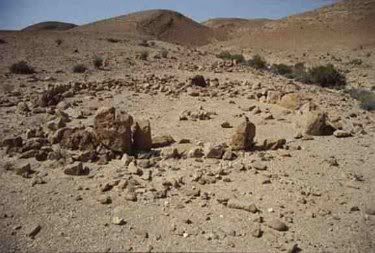
3-Fold Circle Of Har Karkom


Circle Of Stones at Har Karkom

ה' שבט ה'תשס"ז

Saffron (karkom כרכם) is noted to be among the ingredients of a blend constituting my "3-name incense". Karkom is specifically a contribution of my name, Lleucu - where Lleucu is my circle (craft) name within the title Lleucu HaMasovevet.

Karkom is derived from the shoresh (root) כרך, which means "envelop" and "permeate" [1]. This fits well with and further supports the concept that Lleucu is a name which encircles, surrounds and envelops completely.

Har Karkom is also hypothesized to be Har Sinai, the site of the epiphany. Interestingly, there are several circles of stones associated with the "burned platforms" of site HK 301. As my 3-name incense will be burned over 3 consecutive full moon esbats, so too, are there 3 theophanies associated with matan Torah at Har Sinai:

The Lord came from Sinai and rose up from Seir to them; and shone forth from Mount Paran (Devarim 33:2).


Footnote:

[1] Etymological Dictionary Of Biblical Hebrew, R. Matityahu Clark

Technorati tags:

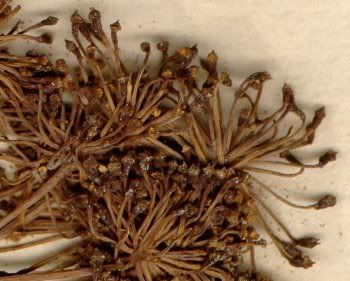
Chelbenah-Kapet & B'Yad Ramah


chelbenah-galbanum

ה' שבט ה'תשס"ז

During the same first Dark Moon on which I will prepare the first reversal candle as described earlier, I will ritually prepare my "name" incense. This is one recipe for my names Liorah Chanah (לֵיאורהּ חנה ) and Lleucu (ללאכי).

5 parts chelbenah (galbanum) - 3 lameds, 2 alephs
2 parts daffodil (shin kokonoe) - 2 yods
2 parts dragon's blood - 2 heys
1 part storax - 1 vav
1 part saffron (כרכם karkom) - 1 kaf
1 part onycha (labdanum, שחלת shechelet) - 1 chet
1/2 part olibanum (frankincense) - 1 resh
1/2 part cinnamon - 1 resh
1/2 part siamese benzoin - 1 nun
1/2 part opononax - 1 nun
9 drops olive oil
8 drops red wine
7 raisins
6 drops honey
5 drops vanilla oil
1 drop Night Queen oil


midnight mortar and pestle

One night preceding the Dark Moon, in an earthenware vessel, completely cover raisins with red wine and soak until the Dark Moon. Cover loosely while soaking.

To the sound of Native American drumming (on CD):

On the night of the Dark Moon, before midnight, add chelbenah to midnight mortar and grind into a nearly fine powder with pestle. Add the other resins and dry herbs or spices to the ground chelbenah and grind all into a fine powder.

Add drops of olive oil, mix. Add drops of red wine (used to soak raisins), mix. Add raisins, mix and grind. Add drops of honey, mix. Add drops of vanilla, mix. Add drop of Night Queen oil, mix.

Allow to dry loosely covered within the mortar overnight. The next afternoon as the sun sets, place the incense into a glass jar and seal until use (during reversal and protection ritual during full moon esbats).

~~~~~

There are 10 primary dry ingredients and 6 adorning moist ingredients in this unique chelbenah-kapet incense blend - for a total of 16 (ביד) unique components - which when burned, whose smoke will rise (רמה).

Mortar - A vessel in which substances are crushed or ground with a pestle.

עברית (Hebrew)
n. - ‮מדוכה, מכתש, מרגמה‬
v. tr. - ‮הפגיז (במרגמה)‬
v. intr. - ‮הופגז במרגמות‬
n. - ‮טיח, מלט‬
v. tr. - ‮טייח‬

Pestle - A club-shaped hand tool for grinding and mixing substances in a mortar.

עברית (Hebrew)
n. - ‮עלי‬
v. tr. - ‮כתש בעלי‬
v. intr. - ‮השתמש בעלי‬


Technorati tags:

Wednesday, January 17, 2007

The Bridge

The sages say: da’at kanita ma chasarta, da’at chasarta ma kanita – “if you have gained da’at you lack nothing, if you lack da’at what have you gained?”


The ogham letters shown are my circle name Lleucu. There are 14 vertical lines above the horizontal and 14 vertical lines below the horizontal. The ratio of the digit sums of these two numbers is 5/5, representing Binah and Malchut, respectively. The ratio itself reduces to 1/1 and further, to 1 (echad).

Also note, there are 6 "sets" of letters, representing the vav of connection and transformation, da'at, Torah and Truth.

Thus, my circle name Lleucu represents the bridge connecting immanence (Malchut), transcendence (Binah) and Aur Ein Sof as revealed in the Malchut of Echad.


Saturday, December 02, 2006

Shining Brilliance

In followup to my previous entry, Double Blessings, also posted on my blog Contemplating Sefer HaBahir, I wrote regarding the double portion of blessings received at the level of keter, and imparted via the ritual circle-casting of HaMasovevet המסובבת. The double portion of blessings via keter is associated with the double portion of the letter beit ב in the root.

In addition to the doubled letter beit in masovevet, my circle name Lleucu has a doubled letter - two letters "L". The letter "L" in Hebrew is the letter lamed ל. Given the significance of the doubled beit/v to masovevet, I explored the kabbalistic implications of the doubled lamed/L in Lleucu (the secret of amen), which stands as the first part of the ritual title: Lluecu HaMasovevet. And this is what I found:

R' Yitzchak Ginsburgh of The Inner Dimension teaches:

The two identical letters in kallel and challel are the lameds. In Kabbalah we learn that the double lamed is the secret of the heart. King David writes (Psalms 109:22):

and my heart is like a corpse within me

King David had killed his evil inclination, leaving a "positive corpse." In place of his evil inclination, he had created a vacuum in his heart, leaving it wide open for G-d's transcendence to enter. In the Torah portion of Emor, both challal and kallel are negative. Both are states of the heart. Challal is the vacuum of G-d in the heart, while the curse, kallel, stems from that very vacuum. Thus we see that vacuum and curse are interdependent.

By working on the character traits of his heart with intensity, King David rectified the negative challal, transforming it to a receptacle of G-d's transcendence, a sanctification of His Name.

This positive transformation of the double lamed is evident as a "shining brilliance" (how appropriate following an entry on my Bahir blog). R' Ginsburgh further writes regarding the double lamed:

In Ezekiel 1:7 kallal means shining brilliance. The positive vacuum of the heart (challal) creates space for the new (chadash) manifestation of G-d's transcendent omnipresence (kodesh). This produces the shining emotive experience of the heart (kallal).


Again,
Blessed be, amen.

Technorati tags:

Friday, December 01, 2006

Secret Of The Split Shin

As explained in a previous entry, Circle Name Of Shabbat Consciousness, the Welsh/Celtic name Lleucu is my Jewitch ritual name. Lleucu, meaning light and daybreak, carries both receptive and imparting mystical functions. It's both a mekubal and a mashpia. It's a circle of receiving and giving. For these and other reasons, Lleucu is an appropriate name for HaMasovevet, one whose "sacred encircling" turns the events of history.

Both my Jewish and Celtic roots came to the USA from Wales/England. Consequently, it honors my ancestors to add a Celtic name to my Hebrew name. Lleucu is the Welsh version of both my English name (Lori) and my Hebrew name (Liorah). These names each describe the same essence in unique ways.

These are my true names. They are neither something I've deceptively pulled out of a hat nor the result of distorted thinking. Each one is intimately woven into the very fabric of my life experience.

An interesting tidbit (hat-tip to Steg, commenting @ Balashon on Samech) surrounding Lleucu which demonstrates the true interweaving of my names with my life experience - both the Hebrew letter sin שׂ (of siyach, like in the epiphany) and the Welsh consonantal sound Ll (of Lleucu) are derived from some unknown common voiceless alveolar lateral fricative. Consequently, one could suggest that as שׂ (of siyach) characterizes "hesech hada'at" of the epiphany, Ll + שׂ might characterize "b'hesech hada'at" (Sanhedrin 97a) of messianic consciousness and the 4-headed shin of the luchot. Just a cute play on doubled/split/two-ב letters?

Technorati tags:

Dare to be true to yourself.