
ה' בניסן תשס"ז
Vayikra - "The peace-offering (shlamim) has the spiritual capacity of increasing peace in the world." [Rashi]
Tzav - On the "strange fire" of Nadav and Avihu, the role of being a "pure vessel" for peace is the role of Woman, not Man.
The following incense recipe brings together into the world of action a link to the supernal Goblet Of Fire (Eliyahu's Cup) as discussed in a previous post.
The Goblet of Fire corresponds to the "place" on the Tree of Life where Keter of Beriyah (water) and Tiferet of Atzilut (fire) are One. In other words, in Keter of Beriyah (which is Tiferet of Atzilut) peace is made between fire and water. Thus, the goblet of fire is exactly this place where peace is made in the heavens [1]. Importantly, we can also understand from this information that the Goblet of Fire is also the Goblet of Peace.
גבעי = 85 = 8 + 5 = 13 = "my goblet"
Brew ingredients by gender and elemental correspondences:
Masculine & Feminine Ingredient (1):
2 parts benzoin (m & f)* - air (avir)
Feminine Ingredients (4)
1 part vanilla (f) - water
1 part white sandalwood (f) - water
1 part myrrh (f) - water
1 part barley (f) - earth
Masculine Ingredients (4):
1 part pomegranate juice (m) - fire
1 part cinnamon (m) - fire
1 part nutmeg (m) - fire
1 part mugwort (m) - earth
Essential Oils (4):
1 drop hyssop (m) - fire
1 drop spikenard (f) - water
1 drop myrrh (f) - water
1 drop cinnamon bark (m) - fire
In this blend there are 9 (a vessel for peace ט) primary ingredients and 4 (Malchut ד) essential oils, for a total of 13 ingredients.
Benzoin is the ingredient where both fire (atzilut, feminine pillar) and water (beriyah, masculine pillar) combine in peace, resulting in elemental "air" (yetzirah and avir kadmon, the middle pillar as above, so below). The entire formula, written out and performed through actually making the incense is the "earth" (assiyah) where One Peacefully Dwells. Just like in the conclusion of the Amida.
Footnotes:
[1] He who makes peace in His heavens, may He make peace for us and for all Israel; and say, Amen. (Oseh Shalom, Conclusion of the Amida)
* Benzoin is a "masculine botanical" by virtue of its hexagonal aromatic ring and is a "feminine botanical" by virtue of its vanilla-like scent, where the hexagonal aromatic ring corresponds to the masculine partzuf zer anpin and where vanilla is etymologically derived from a Latin word meaning "vagina".
Technorati tags: Torah Talmud Torah Judaism Kabbalah jewish mysticism mysticism jewish meditation meditation shamanism jewish shamanism kabbalah iyunit kabbalah maasit witchcraft jewitchery jewitch witch jewish woman sacred feminine divine feminine shechinah lilith spiritual development spirituality kosher spirituality
Saturday, March 24, 2007
Witch's Brew - "Goblet Of Peace"


Wednesday, March 21, 2007
Eliyahu's Cup & The Goblet Of Fire
 ואת-גביעי גביע הכסף ... Bereshit 44:2
The phrase "and put my chalice, the silver goblet" (in Hebrew above) has a total gematria of 752, the same gematria as the Hebrew word for the phase "in a cleft" (בנקרת) in Shemot 33:22.
Shemot 33:22 - And it shall come to pass, while My glory passeth by, that I will put thee in a cleft of the rock, and will cover thee with My hand until I have passed by.
Chalice (goblet) is derived from the shoresh גבע, meaning to "elevate". Magickally, a chalice can correspond to either water or fire, although most commonly in the craft it corresponds to water. Why?
In kabbalistic tarot, the suit of "cups" (chalices) pertains generally to the universe of Beriyah. Keter of Beriyah occupies the place of Tiferet of Atzilut [1]. Elementally, Beriyah corresponds to water, while Atzilut corresponds to fire.
Given this information, the "goblet of fire" corresponds to the "place" on the Tree of Life where Keter of Beriyah (water) and Tiferet of Atzilut (fire) are One. In other words, in Keter of Beriyah (which is Tiferet of Atzilut) peace is made between fire and water. Thus, the goblet of fire is exactly this place where peace is made in the heavens [2]. Which heaven is it made in? Aravot [1].
Taking all this together, we can also see that the "cleft" which sheltered Moshe while Goddess's Glory passed by is the "place" on the sefirotic tree corresponding to the goblet of fire and Aravot.
Interestingly, I had an experience of Aravot in 1996. I've written a poem about it previously (notably here and here). Consequently, I have a goblet of fire both "in the heavens" and "here" in this lowest world.
Yirah Ila'ah, Eliyahu's Cup, The Goblet of Fire
from a sidefolding
looking, seeing something yet not yet
like a great plain of immaterial fire and space
rolling and unfolding
like billowing waves of timewater and lava
empty of place
sensing
in it, deep deep eternal
trembling in sight of it
balancing, returning the gaze
burrowing
into the folding, where I
I was, looking feeling the mind
expanding greatly
one
mo-ment longer
going
past boundaries trembling
in awe of it
the greatness and power of it
from fear and being no thing
admitting I, I looked until
I could look no
more
the last great drop of awesomeness
in it
Footnotes:
[1] Kabbalah, Tradition Of Hidden Knowledge, Zev ben Shimon Halevi (p. 41)
[2] He who makes peace in His heavens, may He make peace for us and for all Israel; and say, Amen. (Oseh Shalom, Conclusion of the Amida)
Technorati tags: Torah Talmud Torah Judaism Kabbalah jewish mysticism mysticism jewish meditation meditation shamanism jewish shamanism kabbalah iyunit kabbalah maasit jewitchery jewitch jewish woman sacred feminine divine feminine shechinah lilith spiritual development spirituality kosher spirituality goblet of fire eliyahu's cup
Saturday, March 17, 2007
Link To Messianic Peace
כ"ח באדר תשס"ז
ויהוה נתן חכמה לשלמה
Sefer HaBahir, verse 3 excerpt
Traditional interpretation: "And G-ddess gave Wisdom to Shlomah."
There exists within Judaism the idea that wisdom (chochmah) is generally preferred over prophecy (nevuah). Moreover, the kabbalah [1] teaches:
The only individual for whom wisdom and prophecy merged into a single stream of enlightenment was Moses, who was able to receive prophecy while still in possession of his routine faculties.
Thus, for Moses, wisdom and prophecy were equivalent chameleons, in a manner of speaking, co-existing together in a single stream of awareness.
How does this relate to the phrase above from the Bahir? Let's examine the phrase.
First, the word chochmah has a gematria of 73. Interestingly, the word הנביאה - "the prophetess" - from Shemot 15:20, also has a gematria of 73. Here then, in the awareness of "the prophetess", is where wisdom and prophecy merge into a single stream of consciousness. Here then, dwells the link to the messianic consciousness of Moses.
Second, a dynamic of this phrase can be observed in the numbers:
32 paths of wisdom (ויהוה)
500, upper hey of binah (נתן)
73, the single stream (חכמה and הנביאה) containing both wisdom and prophecy, where 73 has a digit sum of 10 and a final digit sum of 1 (malchut-keter connection permeating this messianic consciousness throughout all the sefirot)
405 (לשלמה) with a digit sum of 9 (ט), the value of the sefirah-vessel of peace
Taken together, the phrase impregnated with the single stream of messianic enlightenment begins with the Divine and ends contained in a vessel of Peace.
Footnote:
[1] The Advantage of Wisdom Over Prophecy, R' Yitzchak Ginsburgh
Technorati tags: Torah Talmud Torah Judaism Kabbalah jewish mysticism mysticism jewish meditation meditation shamanism jewish shamanism kabbalah iyunit kabbalah maasit jewitchery jewitch jewish woman sacred feminine divine feminine shechinah lilith spiritual development spirituality kosher spirituality bahir
Wednesday, March 14, 2007
Ascent Of The Atarah
Regarding kabbalistic theurgy, Moshe Idel (Kabbalah, New Perspectives, p. 196-7) writes:
The ascent of the Atarah to the highest place in the divine pleroma was adopted by theosophical Kabbalah. Notwithstanding its being a classical symbol of the lowest of the sefirot - Malchut - Atarah is at times portrayed as ascending to Keter, in a way similar to that of the anonymous author whose view is preserved in the book of R. Eleazar of Worms. Already R. Ezra of Gerona had commented upon the verse in Song of Songs 3:11: "the whole structure will cleave and unite with and ascend to Eiyn Sof."
The ritual of composing the Atarah by prayer and its ascent and setting on the head of God is tantamount ot coronation of the king. This installation by ritual is clearly reminiscent of the ancient interconnection between ritual and kingship. Kabbalah may therefore be viewed not only as the cultivation of the Garden but also as the cultivation of the Gardener. If the symbolism of Lebanon pertains to the lower face of Divinity, that of the Atarah belongs to its highest aspect. The human range of activity therefore expands beyond those divine manifestations that are ruling the created worlds, to the most recondite layers of the Divine. But while the lower manifestations are structured or made by the ritual, the higher ones are ornamented by the addition of the crown or crowns; again, these ornaments originate from the ascent of a lower divine power - the Atarah.
Technorati tags: Torah Talmud Torah Judaism Kabbalah jewish mysticism mysticism jewish meditation meditation shamanism jewish shamanism kabbalah iyunit kabbalah maasit jewitchery jewitch jewish woman sacred feminine divine feminine shechinah lilith spiritual development spirituality kosher spirituality
Dina D'Atarah, Reversing A Pulsa Denura
כ"ד באדר תשס"ז
Fifth tarot reading on myself, using my standard procedure and spread.
Wednesday, 3/14/07 @ 1:35 pm, Adar 24, 5767
13th portion of reversal candle to be burned tonight
parchment of petition spell to be burned tonight
mood: slightly depressed, health: tired
moon data: 29 deg. C Sagittarius, 25 deg. S Capricorn, waning crescent, 25 days old, 24% full
sun data: 2 deg. C Pisces, 23 deg. S Pisces
planetary hour: Venus
S/Q 10 of swords
1 - Magician (Gwydion) א
2 - seven of pentacles
3 - ace of swords
4 - page of wands
5 - Hanged Man (Enchantment of Dyfed) ל
6 - six of pentacles
7 - king of wands
8 - queen of cups
9 - eight of wands
10 - ten of wands
Interpretation:
First, a two-letter word immediately falls out into this tarot reading, namely - "no" (לא). In other words, the "Hanged Man" may be trying to stop the reversal ritual. The first month's final portion of the reversal ritual is due to conclude tonight with the burning of the 13th portion of the candle and the burning of the parchment upon which is written the petition spell.
The Hanged Man card mythologically corresponds to the Enchantment of Dyfed. In other words, it pertains to the situation where the kingdom has been "frozen" with respect to movement via a spell of black magick against it.
The fifth tarot position (which the Hanged Man occupies) corresponds to the sefirah Gevurah (also known as Din). This suggests that the black magick enchantment that has been cast over me may be a Pulsa Denura emanating from the sphere known as dina d'leayla. Given the fact that the curse is portrayed by a card of the major arcana (representing the universe of Kadmon), the curse is more likely to be a Pulsa Denura of some sort as opposed to some other type of low level curse.
However, the "Magician" card (in Keter, position 1) has flipped the Hanged Man's לא into "El" (אל). I will be enabled to finish burning the 13th candle portion and spell parchment, despite those who are trying to stop it at a mystical-magickal level. No! to no. So mote it be.
Second, the outcome of the matter is summed up by the ten of wands in the tenth position (from keter in kadmon to malchut in atzilut, dina d'atarah). The ten of wands symbolizes not flinching in the face of hardship and rising to the challenge. It will be done as long as there is still breath in my body.
Technorati tags: Torah Talmud Torah Judaism Kabbalah jewish mysticism mysticism jewish meditation meditation shamanism jewish shamanism kabbalah iyunit kabbalah maasit jewitchery jewitch jewish woman sacred feminine divine feminine shechinah lilith spiritual development spirituality kosher spirituality
Saturday, March 03, 2007
Te'amim Mysteries Ancient Of Days
י"ג באדר תשס"ז
These are the results of the fourth tarot reading I've done on myself using my standard procedure, cards and spread. The data:
status post initiation of reversal and protection spell
performed 3/3/07 Adar 13, 5767
began at 2:38 pm, planetary hour Jupiter
moon data: 24 deg. constellation Leo, 11 deg. signe Virgo, 100% full moon
sun data: 15 deg. constellation Aquarius, 12 deg. signe Pisces
weather-snowing; mood-fair; health-tired
approaching total lunar eclipse in Virgo (5:17 pm)
Shabbat Zachor; Nicanor Day
S/Q - ten of swords (disillusioned and withdrawn)
position 1 - Hierophant (Taliesin) ה
position 2 - Hermit (Myrddin) ט
position 3 - nine of cups
position 4 - Moon (Lake Of Maidens) צ
position 5 - knight of wands
position 6 - Star (Branwen) פ
position 7 - eight of pentacles
position 8 - nine of pentacles
postion 9 - page of cups
position 10 - four of swords
p1 - relationship to current situation: guardian of knowledge
p2 - forces in my favor: withdrawal from outside world, reflection and contemplation
p3 - message from higher self: this time is a cauldron within which the future is brewing
p4 - subconscious preoccupation: memory and mysteries, increasing sensitivity to unseen forces
p5 - past influencing current situation: unique way of recognizing patterns in chaos
p6 - current relationship with others: inspiring and guiding
p7 - psychological state influenced by unemployment, knowledge and experience
p8 - influential unseen forces: patience, honor
p9 - hope for use of artistic abilities
p10 - current outcome: waiting, protection in withdrawal
There are 4 cards from the major arcana indicating very strong Divine direction from the universe of Kadmon. The 4 Hebrew letters הטצפ corresponding to the 4 cards of the major arcana have a combined gematria of 184 (מקדם), a digit sum of 13 and a final digit sum of 4. From these gematria, it can be seen that the direction from Kadmon (מקדם) is rooted in the echad of that universe and brought down through all 4 subsequent universes, Atzilut-Beriyah-Yetzirah and Assiyah.
Hebrew letter permutations:
צפה ט watcher over feminine yesod, protector of power to judge properly
פצה ט open to the mysterious meanings of the טעמים (cantillations, te'amim)
טף הץ "tap" is (writing) board in Aramaic => a righteous vessel to receive prophetic words
As noted above, the total gematria of the Hebrew letters of the 4 cards from the major arcana is 184, the same gematria as the word מקדם meaning "from Kedem". Micah 5:1 speaks of this sphere of highest Keter [1] associated with the partzuf Atik Yomin [2]:
But thou, Beth-lehem Ephrathah, which art little to be among the thousands of Judah, out of thee shall one come forth unto Me that is to be ruler in Israel; whose goings forth are from of old, from ancient days.
Footnotes:
[1] Sha'are Orah (Gates Of Light), R' Yosef Gikatilla (p. 362)
[2] see Yemei Kedem (Ancient Days) here.
Technorati tags: Torah Talmud Torah Judaism Kabbalah jewish mysticism mysticism jewish meditation meditation shamanism jewish shamanism kabbalah iyunit kabbalah maasit jewitchery witch jewitch jewish woman sacred feminine divine feminine shechinah lilith spiritual development spirituality kosher spirituality nevuah prophecy cantillations te'amim ancient of days atik yomin welsh tarot jewish tarot
Friday, February 16, 2007
Lavender - Parah Adumah Temimah
כ"ט בשבט תשס"ז
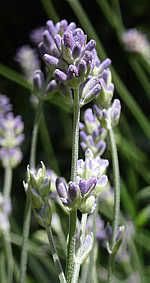
Lavender (ארגמן-כחלחל), also called elf leaf and spike, is a masculine botanical connected to the planet Mercury and to the element air. Among its powers are love, protection, sleep, chastity, longevity, purification, happiness and peace. [1]
Burned as an incense, lavender induces good sleep and rest. Smelling it often promotes a long life. Indeed, I dressed my black shabbat candle this evening with the essential oil of lavender prior to lighting it.
As a component of healing mixtures, lavender protects against the evil eye. Scattered about the home, it maintains peacefulness. So powerful is the essence of lavender that it has been known to bestow upon one suffering from depression, joyousness.
In Hebrew, lavender (noun) is ארגמן-כחלחל. The first term in this construct is argaman (ארגמן). The royal purple of Torah, argaman is derived from the Akkadian word argamannu meaning "purple". Argamannu (argewan, Sanskrit) itself is a synthesis of two Sanskrit adjectives for red - i.e., two different kinds of red - ragamen and ragavan.
The second term - חלחל - means to "permeate". The first letter - כ - of the second term refers to the sefirah Keter (superconscious crown).
Thus, taken together, the Hebrew phrase for "lavender" means to permeate one's will, desire and Divine connection with the royal color of everlasting (keter) life (ateret hayesod-malchut). To make this royal color of everlasting life, one needs (at least) two colors of red (i.e., two colors of blood). In other words, the key to everlasting life is making peace between different colors of "bloods" (peoples), within oneself and within one's world.
Parah Adumah Temimah - why is there death in the world?
Footnote:
[1] Encyclopedia Of Magical Herbs, Scott Cunnignham (p. 152-3)
Technorati tags: Torah Talmud Torah Judaism Kabbalah jewish mysticism mysticism jewish meditation meditation shamanism jewish shamanism kabbalah iyunit kabbalah maasit witch jewitchery jewitch jewish woman sacred feminine divine feminine shechinah lilith spiritual development spirituality kosher spirituality
Saturday, December 02, 2006
Shining Brilliance
In followup to my previous entry, Double Blessings, also posted on my blog Contemplating Sefer HaBahir, I wrote regarding the double portion of blessings received at the level of keter, and imparted via the ritual circle-casting of HaMasovevet המסובבת. The double portion of blessings via keter is associated with the double portion of the letter beit ב in the root.
In addition to the doubled letter beit in masovevet, my circle name Lleucu has a doubled letter - two letters "L". The letter "L" in Hebrew is the letter lamed ל. Given the significance of the doubled beit/v to masovevet, I explored the kabbalistic implications of the doubled lamed/L in Lleucu (the secret of amen), which stands as the first part of the ritual title: Lluecu HaMasovevet. And this is what I found:
R' Yitzchak Ginsburgh of The Inner Dimension teaches:
The two identical letters in kallel and challel are the lameds. In Kabbalah we learn that the double lamed is the secret of the heart. King David writes (Psalms 109:22):
and my heart is like a corpse within me
King David had killed his evil inclination, leaving a "positive corpse." In place of his evil inclination, he had created a vacuum in his heart, leaving it wide open for G-d's transcendence to enter. In the Torah portion of Emor, both challal and kallel are negative. Both are states of the heart. Challal is the vacuum of G-d in the heart, while the curse, kallel, stems from that very vacuum. Thus we see that vacuum and curse are interdependent.
By working on the character traits of his heart with intensity, King David rectified the negative challal, transforming it to a receptacle of G-d's transcendence, a sanctification of His Name.
This positive transformation of the double lamed is evident as a "shining brilliance" (how appropriate following an entry on my Bahir blog). R' Ginsburgh further writes regarding the double lamed:
In Ezekiel 1:7 kallal means shining brilliance. The positive vacuum of the heart (challal) creates space for the new (chadash) manifestation of G-d's transcendent omnipresence (kodesh). This produces the shining emotive experience of the heart (kallal).
Again,
Blessed be, amen.
Technorati tags: Torah Talmud Torah Judaism Kabbalah jewish mysticism mysticism jewish meditation meditation shamanism jewish shamanism kabbalah iyunit kabbalah maasit jewitchery jewitch jewish woman sacred feminine divine feminine shechinah lilith spiritual development spirituality kosher spirituality Bahir kallal
Double Blessings
ומאי ומלא ברכת ה' אלא כל מקום שנאמר בי"ת הוא לשון ברכה
Sefer HaBahir, verse 3 excerpt
Traditional interpretation: "What is the meaning of the verse , 'the filling is G-d's blessing'? This means that wherever we find the letter beit (ב) it indicates a blessing."
The word which describes the sacred circle (encircling) I ritually cast as HaMasovevet המסובבת has two letters beit in it. These two letters beit represent a double portion of "G-d's blessing" at the level of keter.
R' Yitzchak Ginsburgh of the Inner Dimension teaches:
At this supernal level of the soul (keter), there is a double manifestation of all 10 intrinsic powers of the soul. Thus, there is an added dimension of light in the superconscious crown in relation to the faculties of the mind, and 10 times more light in the faculties of the mind than in the emotions of the heart. ... The lights of the powers of her soul shine at all levels of perfect interinclusion.
Blessed Be, Amen.
Technorati tags: Torah Talmud Torah Judaism Kabbalah jewish mysticism mysticism jewish meditation meditation shamanism jewish shamanism kabbalah iyunit kabbalah maasit jewitchery jewitch jewish woman sacred feminine divine feminine shechinah lilith spiritual development spirituality kosher spirituality Bahir
Thursday, November 30, 2006
Semichah Of Yehoshua
In my previous entry, Mighty Mouse Of Emunah, I demonstrated mouse's associations with the south, water, the letter mem, the vowel kametz, emunah of atzilut, and reisha d'lo ityada. In this post, I'll support the association of mouse with "mighty", further support the association of the mem (מ) of masovevet with kametz (ָ) and demonstrate the meditative dynamic of "grip, wander, plucked up" (kametz, siyach, nasach).
First, years ago, I published the following poem, Hesech HaDa'at [1], describing an aspect of the epiphany of 1967 (from my website):
hey you, what are you looking at
the mouse seemed to say silently, to me one day
hidden in the closet, coming close to see
where land meets sea, isolating some field of awareness
distracting the mind toward some special duty
hey you, what did you say
you talkin' to me?
hey you, what do you hear
the mouse seemed to say silently, to me one day
hidden in the closet, coming close to hear
wandering around this anomaly of conversation, suddenly plucked up
toward the task at hand, wiping off all others
hey you, do you hear what I hear
who goes there, talkin' to me
Second, drawing on the already demonstrated inner [2] connection of the vowel kametz to emunah of atzilut, we note that the root [3] of the word kametz קמץ means to "grip in hand" and "clutch". This "gripping" dynamic is clearly evident in the first 3-4 lines of the poem. Hey you! (הי יוֹוּ dynamic of consciousness)
Third, the meditative action of "wandering around" (siyach שׂיח) the "anomaly of conversation" becomes centered around the mouse. Through mouse's correspondence with mem, water and chochmah - mouse on a more focused level, corresponds to the letter yud י of the Divine Name. Yud (yad, with a kametz יָד) means "hand". Thus, here in the first 3-4 lines, awareness is "gripped by the Divine Hand". This Divine Hand is kabbalistically connected to Yehoshua's semichah (Bamidbar 27:23).
Fourth, as demonstrated in the previous entry, mouse rules water (chochmah). That which "wanders around" [4] (masovevet מסובבת) chochmah (water) is initially keter [2] of atzilut - and then when plucked up (nasach נסח), is the light of kadmon. (הלוא זה אוד מוצל מאש - a brand plucked from the fire of beriyah through kametz)
Fifth, the meditative action described in the poem connects to the patriarch Yitzchak, who in Bereshit 24:62-63, "went out to meditate [5] (suach שׂוח) in the field toward evening." Yitzchak kabbalistically corresponds to the sefirah gevurah, might. Here then, is mouse's "mighty" connection.
Sixth, taken together, one meditative action giving birth to the epiphany is described here through the dynamic of "grip/gripped by the Divine Hand, encircling and plucked up". Mouse is the key.
Footnotes:
[1] hesech hada'at, a Talmudic phrase conveying the idea of "distracting the mind" as a method by which to focus kavanah on a single point (nekudah)
[2] the vowel kametz (ָ) corresponds to keter of beriyah and acts as "the bridge" into the "surrounding" consciousness of atzilut associated with emunah
[3] Etymological Dictionary Of Biblical Hebrew, R' Matityahu Clark
[4] מסובבת, masovevet, from the root sovev סבב meaning to encircle, surround, turn events
[5] siyach, suach and nasach are all related derivations through the 2-letter (sha'ar) root שׂח. Interestingly, another 3-letter (shoresh) root derived from שׂח is שׂחה, which means to "swim" and "swimming" - where I (and my "husband") swam out of the water into which we were thrown and meant to drown in yesterday's dream.
Technorati tags: Torah Talmud Torah Judaism Kabbalah jewish mysticism mysticism jewish meditation meditation shamanism jewish shamanism kabbalah iyunit kabbalah maasit jewitchery jewitch jewish woman sacred feminine divine feminine shechinah lilith spiritual development spirituality kosher spirituality semichah yehoshua yad ramah masovevet
Monday, October 23, 2006
Tzemach & Immersive Hashra'ah
שנאמר ומלא ברכת ב' ים ודרום ירשה
Sefer HaBahir, verse 3 excerpt
Traditional interpretation: "Because it is written (Devarim 33:23): The filling is G-d's blessing possessing the Sea and the South."
ברכת has a gematria of 622 and a digit sum of echad. The value 622 represents the 620 mitzvot contained within the unity of keter, together with the "two companions who never separate" [1].
Derived from the root ברך meaning "power growth", it carries the same meaning as the name Tzemach, צמח which pertains to growth.
Combining these two "growing" words together and performing some creative permutations, we have the phrase sequence:
צב רם כח -> mobilize, elevate and bring to life, exert creative power
The above sequence corresponds dynamically to concept of hashra'ah, and to its associated levels of immersive creative power: ohr, chayut and koach.
Footnote:
[1] Zohar 3:4a; R' Yitzchak Ginsburgh, The Hebrew Letters (p. 49)
Technorati tags: Torah Talmud Torah Judaism Kabbalah jewish mysticism mysticism jewish meditation meditation kabbalah iyunit jewitchery jewitch jewish woman sacred feminine divine feminine shechinah lilith spiritual development spirituality kosher spirituality sefer habahir bahir tzemach hashraah
Tafsaret, A Rare Kind Of Sacred Scribe
Torah Of Chesed, Neshamah. The Hebrew word ishah (אישה), meaning woman, is thought to be derived from the root word anash (אנש), meaning to "cause weakness" [1]. However, the neshamah of ishah may come into revelation and expression through the root חשה, meaning "quiet" and/or "refrain from expression or movement" [2].
Supporting this is the consideration that the word חשאי (derived from the root חשה) means "silently" and contains the letters of the word ishah, except that the ה of ishah is a ח in the word "silently". Thus, ishah describes a situation where a "once silent woman" (unable to express Torah) becomes opened (ה <- ח) to expressing it dimly through the lower hey of malchut, without the upper hey of binah (expressive "secret" understanding). This transformation of woman is enabled through a man's mitzvah of brit milah, circumcision of the flesh, being credited to the account of his true bashert.
Torah Of Life, Chayah. Yet evolving from there comes itta (אתתא), the chayah of isha. Itta, a word also meaning woman, is derived from Aramaic. Itta describes a unique situation, one where a woman can express the secret mysteries of Torah: from ת <- א and from א <- ת , from keter to malchut (Ekyeh) and from malchut to keter (Asher Ekyeh), with both the attribute of mercy (ת <- א) and the attribute of justice (א <- ת). This evolution includes and encompasses all the mitzvot of Torah, both the positive mitzvot (ת <- א) and the negative mitzvot (א <- ת) into one mitzvah equal to all the mitzvot (ner Hashem nishmat adamah). This is the Torah of Life through which all the souls of Israel are interconnected. The sanctified avodah of itta connects the Torah of Chesed with the Torah of Truth through the Torah of Life.
Torah Of Truth, Yechidah. Avodah performed bitul bimtzuit mamash fully draws out the itta transformation through a woman's mitzvot of challah, niddah and hadlikat nerot (ChaNaH). These mitzvot pertain to the circumcisions of the lips, ears and heart and ultimately complete the unification of the Torah of Chesed, the Torah of Life and the Torah of Truth to redeem the Divine Spark of yechidah into action and into the world of assiyah. This is the revelation of the Light of Torah and "shines from the good mouth" of the faithful one made in the Divine Image.
Torah Temimah, Tafsaret. The redemption of the Divine Spark, the unification within Torah, and revelation of the Light of Torah is represented by the three tagim on each ט of tafsaret, טפסרט, the vessel of emunah (the unifying spark of Moshe in every Jewish soul).
Tafsaret is a rare kind of Hebrew scribe with roots clear through into Sumerian mystery. From the language of ancient Sumer, סר means "write". טף means "board" [1]. The Hebrew verb root סרט carries the meanings of "script", "a tool for designing" and "marking" [2]. Tafsaret contains within its letters the letters of the root (ספר) of sofer (סופר, scribe). Yet tafsaret also contains two letters ט in addition to the letters which comprise the root word (ספר). These two letters ט have a combined gematria of 18 (חי) - where הי refers redemptively to chayah and yechidah. These encompassing and unifying soul levels thereby impart "unifying life" into the scribal writing of tafsaret.
With a gematria of 358 tafsaret טפסרט is the rectification of the attribute of judgment and of the nachash, the primordial snake. The unrectified nachash is the source of deceiving grace, the fear of insanity, the inability to discern truth, and blemishes of the sexual impulse.
Unification, Ekyeh asher Ekyeh. The Good of Torah is revealed through the unification of mercy (ת <- א) and justice (א <- ת) through itta. Raised together "above the wood", these attributes are transformed into the unified essential attributes of truth and favor. This is the secret of the akeidah. Truth and favor are the primary consciousnesses of the Written Torah and the Oral Torah, respectively. Thus, the Written Torah and the Oral Torah are unified to reveal truth and favor through the the holy letters of all that will be, will be (א <- ת and א <- ת). Ekyeh asher Ekyeh. A woman with a name.
We can now better understand ishah to represent woman in a generic sense, as a woman without a name, and a woman without a deep sense of her own personal story. In contradistinction to ishah, itta represents a woman with a deep unique true sense of her own personal story, a woman who has expressively claimed her deepest unique true identity and destiny - her unique name. Itta is a woman who has awakened to essential personhood and writes in her own name. An ever-evolving name.
ליאורהּ חנה אלישבע צברה בת אהוביה ואדרו
Liorah Chanah Elishaba Tsabrah bat Ahuvyah v'Adaru
This is the feminine path of a sacred scribe, טפסרט, the evolution of woman and contains the secret to actualizing Echad.
Footnotes:
[1] Edward Horowitz, How The Hebrew Language Grew
[2] R' Matityahu Clark, Etymological Dictionary Of Biblical Hebrew
reposted from Evolution Of Woman blog entry & my website page, Tafsaret
technorati tags: torah talmud torah kabbalah jewish mysticism judaism jewish women jewish d'bir hakodesh sacred feminine soferet tafsaret sacred scribe etymology sumerian akkadian hebrew ivrit adar adaru ram cheshvan
Itta & The Secret Of Yayin
As I've written previously at Walking On Fire, the website:
We can understand ishah אשה to represent woman in a generic sense , a woman without name, a woman without a deep sense of her own personal story. In contradistinction to ishah, itta אתתא represents a woman with a deep unique true sense of her own personal story, a woman who has expressively claimed her deepest unique true identity and destiny - her unique name.
Itta is a woman who has awakened to essential personhood and writes in her own name. Thus, itta is a woman with a name, a unique name - this is the crown of a good name, a keter shem tov, the fourth crown. The four ketarim are represented by the four heads (of the letter shin) joined and brought together into the present world through itta, the holy four headed shin of the future world.
The presence of the light of the future world (represented by the four headed shin of Hashem) in the present world (represented by the three headed shin of Elokim) reflects actualized oneness of Elokim and Hashem, a oneness perceived beyond the eye and brought through the very center (תת) of itta's being into reality like a secret wine of awareness. Awakened awareness acts as a vehicle through which the primeval light of creation is channeled into existence. The primeval light of creation is the light hidden and revealed with and between the lines and letters of our Holy Torah. The sod of Torah is the inheritance of itta.
Yayin, the Hebrew word for wine has a gematria of 70, the same gematria as sod, the Hebrew word for secret. Yayin is a mysterious word of unknown etymology. It is a word found in both ancient Semitic and ancient Indo-European language families. Scholars [ref. How The Hebrew Language Grew, Edward Horowitz] tell us that this ancient word for wine, yayin, may have been borrowed by both ancient language families (Semitic and Indo-European) from a common now lost or unknown language. Thus, the secret of yayin is rooted in prehistory and is key to awareness and to understanding the inner essence of a primeval shared language - of a shared story brought out like an exodus of prehistory into history. This is the inheritance of itta, an inheritance redeemed and brought forth into being through rectification of the primeval feminine energy.
The light of awareness which shines from the darkness of prehistory is the "more" light and truth unsealed and opened toward expression which comes from the hidden Essence of G-d. The two letters tav in the center of itta "gives" release to expression of rectified primordial knowing into history. Thus, itta represents completion of the rectification of the tree of knowledge.
Technorati tags: Torah Talmud Torah Judaism Kabbalah jewish mysticism mysticism jewish meditation meditation kabbalah iyunit jewitchery jewitch jewish woman sacred feminine divine feminine shechinah lilith spiritual development spirituality kosher spirituality yayin sod hatorah evolution of woman
Tuesday, October 17, 2006
The Issue Of Karet
ומנלן דהתורה נקראת ברכה
Sefer HaBahir, verse 3 excerpt
Traditional interpretation: "How do we know that Torah is called a blessing?"
The letter nun נ of נקראת as an abbreviation refers to neqevah נקבה, meaning female or feminine. Neqevah is similar to the word used to describe the partzuf Nukvah - the consonants are the same, but the nekudot (vowels) differ. Nukvah refers to the "fallen female" and is pronounced like נוקבה, where the consonants נוקב mean to "be pierced".
However, in the verb construct נקראת, the nun has not "fallen" into the qof ק. It has remained "above" it. The existence of the nun in an "unfallen state" is significant to the concept of karet. Remember, we are and have been dealing with keter Torah.
The first 3 letters of the word נקראת are נקר. As a root standing on its own, נקר means to "cut out". In other words, here is where the feminine nefesh elokit would be "cut off" (through the position of the letter nun) if it was in a "fallen" impure state, through assimilation of the nun prefix into the qof. The spiritual fire would die.
Taken together, we can see that in this case, malchut is truly expressing the Divine Will as it is expressed in keter. With the nun unassimilated, the gematria of the entire word נקראת is 751, with a digit sum of 13, echad. Had the nun been absorbed by the qof, the total gematria would have been 701, with a digit sum of 8, symbolizing ח cheit (transgression).
Technorati tags: Torah Talmud Torah Judaism Kabbalah jewish mysticism mysticism jewish meditation meditation kabbalah iyunit jewitchery jewitch jewish woman sacred feminine divine feminine shechinah lilith spiritual development spirituality kosher spirituality sefer habahir bahir kedushah nefesh elokit keter karet cheit sin
Keter Torah MiSinai
ומנלן דהתורה נקראת ברכה
Sefer HaBahir, verse 3 excerpt
Traditional interpretation: "How do we know that Torah is called a blessing?"
תטהרו
דהתורה has a gematria of 620, the same gematria as the word keter (the level of Torah revealed at Sinai), the number of letters in the Torah text of the ten commandments, the full number of the mitzvot, the number of pillars of light which "connect the ceiling of keter to the floor of malchut" [1], and the gematria of the word "titharu" which alludes to the revelation of keter in imma ila'ah.
טהרות
It's all here, in the word דהתורה.
Footnote:
[1] R' Yitzchak Ginsburgh, The Inner Dimension
Technorati tags: Torah Talmud Torah Judaism Kabbalah jewish mysticism mysticism jewish meditation meditation kabbalah iyunit jewitchery jewitch jewish woman sacred feminine divine feminine shechinah lilith spiritual development spirituality kosher spirituality sefer habahir bahir daat torah keter torah 620 mitzvot woman of valor
Thursday, September 14, 2006
Bahir - A Journey Into Redemptive Consciousness
"Rabbi Nehuniah ben HaKana said: One verse (Iyov 37:21) states ... "
The first word [1, דבר] of the first line [קו kav, 2] of the Bahir is the letter configuration אמר, where אמר is an expression signifying a direct connection to the sefirah malchut [3,4] and to the Oral Torah [3]. Importantly, the kav finds an attachment to reality through the "world of the feminine" (see Shechinah) which is malchut. The "origin" of this female "mentality" which establishes the point of attachment is in tevunah (comprehension), one of the two partzufim of imma-binah.
Without the first word of attachment through malchut, the whole brilliant light of the kav cannot be brought into manifest existence nor into the world of unified action. Without malchut to anchor it, it remains incomplete and unmanifest.
Further supporting this, the configuration of the last word in kav 1 is אומר. Simply, אומר demonstrates the whole function of kav 1 - to emanate, receive and anchor the brilliance of the kav, represented by the hebrew letter vav ו, in malchut, represented by the expression אמר.
We can also see that kav 1 in its entirety, אמר to אומר , represents the unification of tiferet (zer anpin ו) and malchut (nukvah אמר). Importantly, the unification (yichud) [5] is initiated by malchut, expanded by zer anpin, and that expansion is anchored by malchut. Moreover, we can see that the emanation of the kav (of Adam Kadmon) into reality indeed takes place in two stages -> אמר and אומר.
Further, kav 1 enclothes the dynamic which drives redemptive consciousness through the three stages of point (אמר), line (ו), and area (אומר). The first expression of אמר is written large, alluding to the full unrestricted rectified consciousness (of 3 heads) of malchut as it found in the sefirah keter.
Additionally, we note that, while the first word אמר does not, the last word אומר does contain the Divine Name associated with messianic consciousness [6] - that is, the configuration אום.
Footnotes:
[1] dvar, word, דבר signifying an act connected to gevurah [3, 4] - i.e., a tzimtzum
[2] "Into the primordial darkness, the "night" of the vacuum created by the tzimtzum with the "point" of the reshimu therein (filling the vacuum with "potential" being), God radiated a ray of Divine light, the ray of "morning." - This quote regarding the kav from The Inner Dimension fits with the message of entire first pasuk of the Bahir as well, which includes the statement "He made darkness His hiding place."
[3] Sha'are Orah (Gates Of Light), R' Yosef Gikatilla, first gate-tenth sphere
[4] אמר is the first דבר of the Bahir- the significance [3] of this is that malchut and gevurah are both "contained" in the first word of the Bahir, further signifying that the foundation of the Bahir is established on the perfect Unity of the Written and Oral Torah.
[5] That performing a yichud is the objective of the first pasuk of the Bahir is included in the first part of its third statement regarding verses: "A third verse comes and reconciles the two." Yet, even here in the first kav, we can see that objective is encoded and contained in the first word.
[6] The Hebrew Letters, R' Yitzchak Ginsburgh, on the letter נ nun: "נאמן (faithful) begins with נ, just as the full spelling of the letter נ itself, נון . When the middle letter of נון, vav ו, enters between the two middle letters (אם) of נאמן, the secret of the Divine Name אום, related to the coming of the mashiach, is formed."
technorati tags: Torah Talmud Torah Judaism Kabbalah jewish mysticism mysticism Bahir redemptive consciousness messianic consciousness geulah yichud


 Posts
Posts



