
Leah came to "meet" me last evening (19 Elul), how (gag) sweet! But, Marion is the one who fell and busted her head on the cold heater after she ate (in the cafeteria). Not me. And you know what? I don't care.
Try, try and try again. But I'm too much of an angry bitch to die.
Wednesday, September 13, 2006
Leah, Marion & The Busted Head

Thursday, September 07, 2006
Kli Tahor: Artistic Obligations & Aseret HaDibrot
Spot at hashkafah forums asked the question:
Artists ... do you get insulted if someone suggests an improvement to your work, be it in painting, graphics, music, etc.?
In my own case, that would depend upon the kavanah and accuracy of the criticism, as well as whether or not there was an established relationship of trust between myself and the one offering suggestions. Hishtavut does not require us to lay aside discernment.
Some people just want to tear me down. Some people might have worthy suggestions. I don't know that I would necessarily be insulted by an unworthy suggestion, but I certainly wouldn't consider it valid nor "accept" it as I would a worthy one.
Ultimately, however, my work needs to be true to reality as I see it, as opposed to a reality "I do not know" (i.e., the reality of someone else). In other words, I am responsible for the light given to me by Hashem.
Importantly, this responsibility of knowledge is encompassed by one of the aseret hadibrot - specifically, not to worship a god one does not know. One is responsible for that which one knows, and not for that which one does not know.
One purpose of art is to touch and draw down the deep supraconscious humanity (in devekut with the Divine) within the artist. When an artist accomplishes doing this, s/he has become a kli tahor (pure vessel), and the art itself is able and acts to touch and draw out the deep supraconscious humanity of others. Eliciting a response within or from another, known or unknown by the artist, is evidence that this purpose has been accomplished to some degree.
With respect to professional art, a professional commissioned artist (which I am not) has an obligation, depending on the nature of the contract, to try to portray the message of the client as opposed to strictly portraying his or her own vision. One is acting as an emissary of or as a partnered collaborator with the one contracting the work. Like Betzalel and Ohaliav. Or like Zebulon and Issachar. This kind of artistic work is a visionary partnership, not the solitary vision of the artist.
Taking this all together then, I think that there are different artistic obligations and expectations depending on the context and nature of both the criticism and the work. Necessarily, the role of the input of others varies according to those specific obligations and expectations.
technorati tags: Torah Kabbalah Judaism art artistic criticism aseret hadibrot shliach kli tahor
Din Rodef & Negative Mitzvah 310
I dreamt.
I observed namelessly throughout the dream. I was in a mystical school, like a boarding school. There were many students in the background, but my observation focused on the headmaster of the school, the elder female student and two novice students, one male and one female who were "partnered" together in craftwork.
Much was going on in hidden places. The novice male student was building a 3-sided mystical poster presentation like one might do for a scientific symposium describing one's research project. The novice female student was writing a research thesis. These two novice students were really kabbalistic scientists [1] as opposed to "mystics" or wonder workers.
The elder female student was a witch. She cast an evil eye upon the novice female student. She feared that the novice female student might be competition for her. The headmaster was impressed with the novice students' craftwork.
At first I thought she only feared that the novice female student would excellently outdo her regarding craftwork, but then I saw that the headmaster and the elder student were engaged in a hidden affair of some sort. She feared her place might be usurped by the female novice student who demonstrated excellent work.
In a hidden room like a storage area, I saw the witch call up curses (see motzi shem ra) against [2, see rodef] the novice female student. Little formless things appeared out of nowhere as she called up the curses. The little formless things then morphed into poisonous insects [3, חיפושות]. The witch commanded them toward the female novice student's room.
They attacked the novice student in the dark as she slept, causing her to break out in boils and hives which disfigured her face so that she wouldn't be pretty to the headmaster. When the novice female student woke up, she was horrified at her appearance and curled herself up into a corner in solitude [4,5 see hitbodedut], hiding herself from the view of others.
The headmaster knew immediately who had cast the curses as only one person in the school had been taught the black magical arts. He summoned the witch to an audience.
The witch knew she had violated the rules by casting the curses, but she felt confident that she could escape judgment due to her intimate relationship with the headmaster. She felt that the headmaster was addicted to her physical charms. But she was wrong.
When she entered the study of the headmaster, the witch bared her breast and tried to coax the headmaster into a dalliance. But, the headmaster was not swayed from the business at hand - the illegal use of black magic against a fellow student.
He condemned the witch, which turned her into a bowl [6, קערה] of dirty mire and clay. All that was left of her was complete tuma.
The headmaster set the bowl of tuma on a dock (רציף) as if waiting for something in preparation for burying it in a sea of mire and clay [7]. Other students were swimming in this sea. Though made of mire and clay, the sea was not tuma.
I could only observe. I didn't want the bowl of tuma to be buried in the sea of mire and clay and contaminate everyone else in the sea. But, somehow I could sense the headmaster's thinking for burying it in the sea - like the 1/60th law, the sea would nullify the impurity of that in the bowl.
But, I was thinking more like pesach where I didn't want any chametz in the sea [8], not even a drop [see ערף].
I woke up.
And turned on my computer and noticed that today I am a lowly insect in the TTLB jewish blogging ecosystem, when yesterday I was a wiggly worm. And although my face is not disfigured with boils and hives, I did become nauseous as I wrote this post and had to go throw up. I'm not sick and I don't throw up normally for no reason at all.
Footnotes:
[1] Paraphrased from the Torah Science Foundation homepage: kabbalistic scientists "consider the Torah as the ultimate source of Divine wisdom accessible to human exploration and seek to implement a new constructive paradigm for the unification of Divine and secular knowledge, exploring the physical world and developing models based upon experimentation, to propel humanity forward."
[2] A rodef (Hebrew רודף, literally "pursuer"), in traditional Jewish law, is one who is "pursuing" another to murder him or her. According to Jewish law, such a person must be killed by any bystander after being warned to stop and refusing. Wikipedia on rodef
[3] חיפושות , insects reduces to 9 where 9 links to the letter tet ט and represents the feminine yesod and the female "serpent" energy
[4] "Hitbodedut is the Hebrew verb, to be alone. It also refers to a method of prayer and meditation taught by the Hassidic rebbe, Nachman of Breslov. The method involves talking to God in an intimate, informal manner, where the practitioner pours his/her heart out about all of his/her problems, thoughts and feelings. Nothing was viewed by Nachman as being too mundane for the practice - business dealings, conflicting desires, spiritual problems. Even the inability to properly articulate what to say in a session of hitbodedut, was viewed as a legitimate subject to engage God with." Wikipedia on hitbodedut
[5] "The only way to return to the roots of one's being and merge in the unity of God is through nullifying the self. One has to efface the self completely until one becomes wholly merged in God's unity. The only way to achieve this state of self-transcendence is through hitbodedut. By secluding oneself and giving voice to one's inner thoughts in the form of personal prayers to God, one is able to remove all negative traits and cravings to the point that one nullifies all materialism in oneself. Then one is able to become merged in the Source. True hitbodedut is practiced in the depths of night, at an hour when everyone is free from their toil in the material world." The Field, R' Nachman's Teachings at Azamra
[6] קערה from the shoresh קער meaning to contain; deep spots (see tzara'at)
[7] "In Hebrew, mire is refesh רפש, and clay is tyt טיט. The only place in Tanakh where the two are mentioned together is in the verse (Yishayahu 57:20), 'the wicked are like a troubled sea. He cannot rest, and its waters cast up mire and clay. ... 'Mire and clay' allude to the interaction between chochmah (water) and malchut (earth). Mire consists mostly of water, and therefore represents the dominance of chochmah. Clay consists mostly of earth, and represents the dominance of malchut. The mire is in the writing fluid, while the clay is the medium upon which it is written." Sefer Yetzirah 1:11
[8] And this is an inner meaning of negative mitzvah 310 "do not suffer a witch to live". In other words, it is referring to the thinking that one can nullify that which cannot and should not be nullified and must be transformed.
technorati tags: Torah Talmud Torah Judaism Kabbalah kabbalistic science Torah science science jewish mysticism mysticism motzi shem ra witch negative mitzvah 310 mitzvot halachah mire and clay sefer yetzirah kli tuma tzaraat tzarua chametz din rodef rodefim dreams dream interpretation oneiromancy nevuah prophecy
Wednesday, September 06, 2006
Uncovered & Into The Light
Given the current controversy regarding the butcher who sold putatively treif chicken and the seeming ubiquitous nature of "character assassinations" of those the community doesn't like for some reason within the Jewish community, I don't see how anyone could disbelieve me when I claim that my life has been destroyed by unknown enemies.
The difference between this guy and I is that while the guy knows the reason for the attacks against him (he sold putatively treif chicken), I have no real clue as to the reason my life was destroyed. Of course, I do have a clue as to the underhanded methods that can be used to destroy lives. Just this week, I have evidence that my yahoo email account (publicly listed on this blog) was hacked and messages were sent (on Sunday and Monday, apparently) to Avielah Barclay from that account that I did not send. I don't know what the messages said, because there is no copy of the two messages in my sent box (to which I received an automated reply from her email to the effect that she was away from her desk). Underhanded acts like this are despicable. Totally despicable and reprehensible.
I am publishing this in compliance with the halachah of din rodef, as publishing it is my only weapon of defense.
technorati tags: jewish issues jewish women soferet sofrut rodefim din rodef character assassination amalek hacker halachah ethics
Tuesday, September 05, 2006
Ari By The Nile
I found the one link that was messing up (and deleting) the entire entry Running On Regalim when I tried posting it on one of my other blogs. Interestingly, it was the link I had for the word "river" (pertaining to the Nile) from the Ascent Of Tzfat website.
When I looked up a replacement link with a URL Yahoo 360 (the blogsite that would not accept the river link that blogspot, wordpress and livejournal all accepted) would accept, I found a link that spoke about the Ari learning by the side of the Nile. This struck me as interesting because, between two words that I could have chosen for the word locker in the entry describing the dream, I chose the word ארונית over the word נועל from my dictionary because of its similarity to the word aron (ארון and my experience, Epiphany In The Closet In 1967).
The shoresh of the word I used for locker is from the same root (ארה) as lion (אריה), where the Ari is commonly called the Holy Lion.
So, how is this interesting? The "error" in the link emphasized some connection between the river, Tzfat, the Ari and the aron (hakodesh, the locker) flowing through my dream. I corrected the error in that link. In other words, I made a tikkun.
The tikkun I made reminds me of some story I heard once about a cat who meandered into the beit midrash. The tzaddik in the room addressed it saying something like "you can go now, I've given you your tikkun." I don't recall the exact story, but that is the essence of it. The "error in the link" was like that cat seeking a tikkun.
I think this is a good example of Divine Providence and "redeeming an error".
technorati tags: Torah Talmud Torah Judaism Kabbalah jewish mysticism mysticism Ari Yitzchak Luria
Running On Regalim
I dreamt.
The oppressive rulers were gathering up people on a small ridge [1, רכס] and throwing them into a large river [2,7] to kill them. I was brought there too. A man was with me and we escaped from the gathered crowd of people. Our escape was noticed.
We had a head start, running (see ratzo vashov) from our pursuers רודפים, but the man I was with knew those pursuing us would soon catch up. We were running on foot [3, רגלים see shalosh regalim and exile].
We had no weapons with which to kill them, so the man decided to lock us up so that we couldn't be taken back to the river or be killed bodily by spear. There were two lockers nearby. So, first he locked me up in what looked like a long body-length (see guf kadosh) school or gym locker [4,7 ארונית]. Then he locked himself up in the one next to it. Our locked lockers stood (amidah), and then lay resting side by side (see world-to-come and totafot).
The pursuers caught up with us. They knew we were hiding in the locked lockers (see 7 double letters, sefer yetzirah) but they couldn't unlock the lockers to pull out and recapture us. They tried very hard to unlock our hiding places (setarim סתרים), but were unsuccessful.
In frustration, they tried to "poke through" the locked door of my locker (see alef) with their fingers to spear me. I saw the temporary "indentation" where they tried to poke their way into my chamber. The mystery metal somehow allowed the form to show the attempt, like a malleable membrane might conform to the form of that trying but unable to break through.
When they realized that they wouldn't be able to break in to draw me out they decided to throw [5] our lockers out into deep dark space. And they did.
Yet, when they had gone, our lockers landed back down on earth (see ratzo vashov). We emerged [6].
Footnotes:
[1] from the shoresh רכס meaning to connect or bind artificially
[2] "The Ari spent much of his time secluded in a small house along the Nile river where he studied uninterruptedly. Here Eliyahu Ha'navi would appear to him and teach him the secrets of the Torah known as Sod or Kabbalah. He once told his students that it would take him eighty years to teach them what he was able to learn in just one night. " Israel iguide
[3] "There are two kinds of middos, those with which one is born and those to which one must acclimate oneself. Those with which one is born are called "derachav" (his path), for they are one's derech from the beginning of one’s creation. Those to which one becomes acclimated are called regel (habit or foot), because one becomes acclimated (hirgil) to them. "Those [middos] to which one becomes acclimated, one must guard and straighten them a lot. When one guards them, then those that were in one's nature will certainly be guarded." R' Dov Kramer, Aish Das
[4] lockers, from the shoresh ארה meaning to contain and leader, as opposed to the shoresh נעל meaning foot (see Barefoot Path of the Neviah).
[5] "There is also a verb derived from yad - ידה - meaning 'to throw, hurl, cast'. " Dave at Balashon on the letter yod
[6] "To survive and emerge physically unaffected exemplifies the existential power of spontaneous rebirth-the Divine "Holy of Holies" imbuing the soul of the would-be martyr with the power to metamorphose his body. This level corresponds to the actual "spark of God" within the yehida of the Jewish soul. This spark derives from the essence of the Infinite Light above ("preceding") the primordial contraction"-tzimtzum. The secret of tzimtzum excludes, from the perspective of creation, the possibility of an absolute miracle as described above. The "spark of God" enclothed within each Jewish soul allows for the manifestation of such a miracle. This is ultimately the secret and purpose of the presence of the Jewish soul in creation." R' Yitzach Ginsburgh, Gal Einai Institute
[7] Note the shoresh (ארה) of the word I chose to denote locker (ארונית) is from the same root as Ari (lion, aryeh אריה) who spent time by the side of the Nile.
technorati tags: Torah Talmud Torah Judaism Kabbalah jewish mysticism mysticism dreams oneiromancy dream interpretation nevuah prophecy regalim merkavah heichal heichalot exodus redemption geulah pilgrimage festivals shalosh regalim sefer yetzirah 7 double letters guf kadosh techiyat hametim resurrection ratzo vashov
Monday, September 04, 2006
Amidah Between The Pieces: Staff Of Moshe
Part 1: The dream I dreamt.
Simply, I saw a man throw a snake down the back of my shirt (see levushim) as I rested. It wiggled to align itself with my spine. I jumped (see kefitzah), lept up (see dilug) quickly and pulled it out by its mouth.
Then, "I" (ani<->ein) was, simultaneously acting in the form of my son (see bohu, arich anpin) and observing purely (see taharah) without form (see tohu). In the form of my son, I took the snake and held it out in front of me to see it as I stood (see amidah). Like a crocodile (tanin, see Regarding Dinosaurs) wrestler (see Moshe and the Snakes and Par'o, 4th aliyah), with a hand on each side of its mouth, I opened the mouth wide and stuck my nose between its jaws - like a feat of accomplishment.
The snake tried to bite down, but through some maneuver faster than thought, my hands were now at its midsection and the snake bit down on its own tail - like the ouroboros and teli.
Then, again through some maneuver faster than thought, my hands were on either side of its mouth. I again opened its mouth wide. This time, however, I ripped the snake into two equal parts, holding one half of the snake in each of my hands. Dangling the halves (see banner - flagpole) through the air (see alef) as they hung יי in my hands from my outstretched arms יהיה (see hands of Moshe and yihyeh), I stood between the pieces (see Avraham & covenant between the pieces).
I woke up.
technorati tags: Torah Talmud Torah Judaism Kabbalah jewish mysticism mysticism dreams oneiromancy nevuah prophecy staff of Moshe tanin nachash kundulani feminine energy sacred feminine feminism shechinah tohu vebohu levushim telepathy taharah kefitzat dilug tzimtzum arich anpin ouroboros teli sefer yetzirah covenant between the pieces
Categories Of Gematria
Ideal Form: chelek hamishkhal1
numerical equivalence between two words where each word also has the same number of letters; subcategories include chelek hachibur and chelek haperud where some letters may be combined or separated to form other letters
9 principle ways1 for calculating word values:
1. mispar hame'ugal (the round number, mispar katan, cheshbon za'ir deChanoch2)
all tens and hundreds are reduced to single digits 1-9;
ק = י = א = 1
2. mispar hakadmi (cumulative value, mispar kidmi)
each letter is the sum of the values of all the letters from alef to that letter, inclusive; א = 1, ב = 3, ג = 6, etc.
3. mispar hechrachi (normative value)
simple sum total of the normative values of the letters, אחד = 13
4. mispar musaphi
same as mispar hechrachi except for also adding to the sum-total of the word the number of the amount of letters in the word אחד = 16, or adding the kolel (1 for the word as a whole) אחד = 14
5. mispar hameruba haklali
squaring of the mispar hechrachi, אחד = 132 = 169
6. mispar hameruba haperati
squaring of the individual numbers, אחד = 12+82+42 = 81
7. mispar shemi (miluy)
numbers of the names of the letters, filling in the letters where aleph (א) is the number (111) of its name, אלף; such that אחד = 953
8. mispar hamispari
sum of the numbers spelled out as words; echad,one (13) + shemonah,eight (395) + arba'ah,four (278) = 686 = אחד
9. mispar hamispari hagadol
combination of #7 and #8; each letter is spelled out fully (miluy) and that equivalent number is spelled out which in turn has a numerical equivalent;
y 10 י + yod 20 יוד + esrim 620 עשרים
so, in this system י = 650
Additional methods1,3,4 of calculation:
10. mispar gadol3 (the great number)
five final letters have values 500 (kaf), 600 (mem), 700 (nun), 800 (pey), 900 (tzadi)
11. mispar kaful
multiplying letter-units instead of summing them
12. mispar temuri
taking the gematria of a permutation4 of the original word
footnotes:
1 Spice Of Torah - Gematria, Gutman G. Locks; Pardess Rimonim 30:8, R. Moshe Cordovero
2 Zohar III:251a; Tikunei Zohar 10:26a
3 Aruch, s.v. at-bach; Rashi on Sukah 52b, s.v. at-bach; Chochmat Shlemoh, Maharshal on Sukah 52b
4 via alphabetic transformations (Chilufei Otiyot), for example
additional references:
Sefer Abudraham, R. David ben Yossef
Gematria, The Mathematics Of Torah
Types of Gematria Table
technorati tags: Torah Talmud Torah Judaism Kabbalah jewish mysticism mysticism gematria
Prophecy - Words & Resources
Ten terms are used to describe nevuah; here is a list of those words:
- Vision - Chazon חזון
- Speech - Dibbur* דיבור
- Saying - Amirah* אמירה
- Influx (drops) - Hatafah הטיפה
- Prophecy - Nevuah נבואה
- Command - Tzivuy ציווי
- Burden - Masa משא
- Parable - Mashal משל
- Metaphor (Figure Of Speech) - Melitzah מליצה
- Allegory (Riddle) - Chidah חידה
These terms relate to ten different mystical levels experienced by the prophets. Other words pertaining to prophecy and the prophetic experience include:
mar'oat (Yechzekiel 1:1)
ra'oh (the "reverse vision" of chazon)
kri'ah
vayikar (bamidbar 23:4, Rashi)
bat kol
Rambam (Moreh Nevuchim, II45) lists eleven coded degrees of prophecy:
- the spirit of Hashem (ruach Hashem) - being moved to action
- holy spirit (ruach hakodesh) - force comes upon one causing speech or communication
- seeing a parable in a dream
- hearing articulate and clear speech in a dream without seeing the speaker
- being addressed by a man in a dream
- being addressed by an angel in a dream
- seeing He who is addressing one in a dream
- a vision or parable of prophecy during the day (not sleeping or dreaming)
- hearing speech in a vision of prophecy
- seeing a man who addresses one in a vision of prophecy
- seeing an angel who addresses one in a vision of prophecy
- ---
- Moshe's unique level of prophecy: mouth to mouth
Ruach HaShem, The Spirit Of G-d
Torah and Nevuah
Prophets and Prophecy In Jewish Law
Becoming A Prophet
The Imaginative Faculty & Prophetic Influx
Ten Words To Designate Nevuah
Negative Attributes & Direct Prophecy
The Prophecy Of Moshe
Rambam's Moreh Nevuchim
Mashiach's Prophecy & The Secret Of Splitting The River
Prophets & Prophecy
Moshe's Prophecy According To Reform Judaism
The Phenomenology Of True Dreams In Maimonides - I want this book!
What Is Prophecy?
Dreaming
More On Ruach Hakodesh
Foresight & Prophecy (tzofeh)
These links will be updated periodically. Please comment to suggest a link or additional resources - thanks!
technorati tags: Torah nevuah prophecy degrees of prophecy Rambam dreams oneiromancy
Friday, September 01, 2006
Mesirut Nefesh, Imma Ila'ah & Leatid Lavo
אלול.ט remember, I sacrificed my soul for you ... shabbat 89b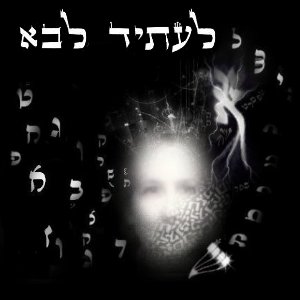
ever in my ear, a feast absolutely senseless, with a holy madness
seizing the moments, turning over time, plunging into history
one sight, one mind, our bodyguard
the curious melody that plays your heartsound, a mystery mark
weaving secretly through mine
upon reverberating strings jeweled with a rhythm of the land
smelling darkly deep, a resurrecting wine fully alive
aged on the way, homeward bound
body and soul, dancing like lovers with eternal breath
a song between two old friends
an extraordinary ordinary treasure
resting plainly like a tool within some wooden dreambox
gently blowing
the most beautiful light of midnight
mesirut nefesh & halachah ve-ein morin kein
"The future to come" (leatid lavo לעתיד לבא) is a higher revelation than that of "the coming world" (olam haba עולם הבא): In the writings of the Arizal it is explained that "the coming world" corresponds to the level called Tevunah, whereas "the future to come" corresponds to the level called Imma Ila'ah, which is higher. - R' Yitzchak Ginsburgh, The Alef-Beit
akeidat Yitzchak, leatid lavo and arguing G-d for redemption:
R' Shmuel, the son of Nachmani, said in the name of Rav Yonatan: "What does the verse mean, You are our father, for Abraham did not know us and Israel did not recognize us. You [G-d], our Father, Redeemer, forever is Your Name. [Isaiah 63:16]. In the future (leatid lavo), God will say to Abraham, 'Your children have sinned against me.' And Abraham will say in front of Him, 'Master of the Universe, wipe them out for of the sanctification of Your Name.' God will say, 'Perhaps Jacob, who had experienced difficulty raising his children, will ask for mercy for the Jewish people.' G-d will say to him, 'Your children have sinned against Me.' Jacob will say in front of Him, 'Master of the Universe, wipe them out for the sanctification of Your Name.' God will say, 'The old man has no reason, and the young one has no advice." God will then say to Isaac, 'Your children have sinned against me.' He will say in front of Him, 'Master of the Universe, my children? My children, and not Your children? When the Jews said, We will do and we will listen, You called them my first-born son, and now You call them my children, and not Your children? Besides, how much did they sin? How many years are the years of a man's life, seventy? Subtract [the first] 20, for which a person is not punished, you are left with 50. Subtract 25, which are evenings, and you are left with 25. Subtract 12-1/2 which a person uses to pray, to eat, and answer nature's call, and you are left with 12-1/2. If You can tolerate all of this, good; if not, then let us split it, half on You and half on me. If you will say that all of the years of their sins are on me, remember that I sacrificed my soul in front of you (for you).'" [Shabbat 89b]
atarah:
This is important to know, because another name for the sefirah of Yesod is "Goel," which means "Redeemer" (Ziv HaZohar). In other words, if redemption is a function of the sixth sefirah - and it is:
The Yesod divided into two kings, the Yesod and the Atarah. The Atarah is relevant to "malchus" since it is her (Yesod's) crown, which is why it is called "Atarah". . . Therefore, the Yesod and the Atarah became two, but after the tikun the Yesod and the Atarah became one in order to join together Zehr Anpin and Nukveh, forever . . . This is the sod of "Yemos HaMoshiach" being at the end of the sixth millennium . . . (Hakdamos v'Sha'arim, page 172) - and Yesod, by definition, cannot hold back its blessing. Redemption is then bound to spill out early just as the revelation of Yosef's true identity.
yesod, the light of binah (imma) & redemption:
If we, the Jewish people, act as if God and Torah are all that counts, then, the light of binah is drawn down and becomes attached to the lower six sefirot, and, this, in turn, elevates these six sefirot upward towards binah. The result is redemption.
technorati tags: Torah Talmud Torah Gemara shabbat 89b mesirut nefesh imma leatid lavo akeidah halachah ve-ein morin kein atarah
Subscribe to:
Posts (Atom)


 Posts
Posts


