Showing posts with label semichah. Show all posts

Thursday, October 25, 2007

Semikhah B'Yad Ramah

With the moon 100% full, י'ד בחשון תשס"ח

just noting connections ...

between the poem-entry Ram Cheshvan of ב' בחשון תשס"ח where it is written:

resurrecting raining drops like semikhah
from the heart of timeless times to come, into time

and the tarot-entry From The Onset Of Time of י'ב בחשון תשס"ח where it is written:

מ'אז implies something advancing "from the onset of time"

The second tarot-entry bringing it down is 10 days following first poem-entry mentioning semikhah "coming into time". The 10 days of bestowal correspond to yad ramah.

Wednesday, September 05, 2007

Her Hands In Herstory

כ"ב באלול תשס"ז

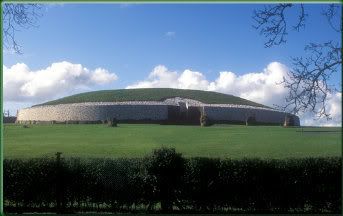
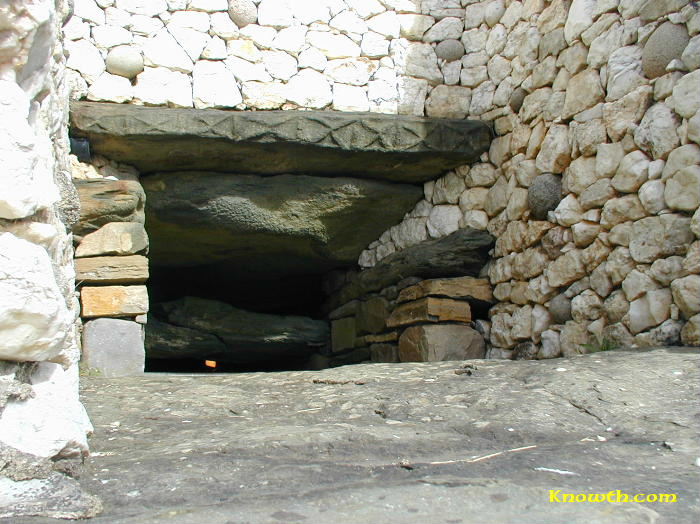
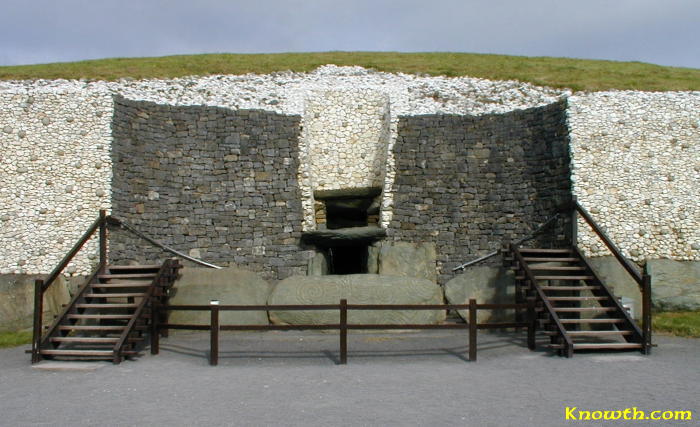
In follow-up to my previous entry, Dark Heart of the World, regarding the 19 metre passage into the ancient Temple of Life of Newgrange:

The passage and chamber of Newgrange are illuminated by the winter solstice sunrise. A shaft of sunlight shines through the roof box over the entrance and penetrates the passage to light up the chamber. The dramatic event lasts for 17 minutes at dawn from the 19th to the 23rd of December.

As are the triple spirals engraved throughout the Temple symbolic of the Divine Feminine, so too are the numbers 19 (Eve) and 17 (the gematria of "tov"-good, characteristic of the introspective "womb" Hebrew letter tet ט) symbolic of the Divine Feminine.

Interestingly, another gematria found in the numbers also points to Her.

The Divine Feminine "sun" of tevunah penetrates the darkness from December 19-23. The numbers comprise a "passage of time", namely 19, 20, 21, 22 and 23. The sum of these (ה) five "expressively feminine" numbers is 105, the gematria of a Hebrew word for "her palm" (כפה) and "her projective beauty" (ייפה importantly with two letters yod, symbolizing the Divine Name).

The ancient Temple of Newgrange still stands today in amazing wholeness as a witness to Her Endurance, year to year. The Hebrew word ימימה for "year to year" also has a gematria of 105.

וְשָׁמַרְתָּ אֶת-הַחֻקָּה הַזֹּאת, לְמוֹעֲדָהּ, מִיָּמִים, יָמִימָה
Thou shalt therefore keep this ordinance in its season from year to year. Shemot 13:10

Sunday, August 26, 2007

Aliyat Hadorot & The Divine Feminine

י"ב באלול תשס"ז

In follow-up to yesterday's entry, Imhotep & Kriat Yam Suf, here is a recrafted repost of a Walking On Fire entry originally posted May 22, 2006, Aliyat Hadorot.

_________

Beginning with background information from this continuing online discussion:

(Pirkei Avot, on the transmission of Torah since Sinai, contributed by 'int')

Moshe received the Torah from Sinai and passed it on to Yehoshua; Yehoshua to the Elders; the Elders to the Prophets, and the Prophets passed it on to the Men of the Great Assembly.
(Soncino Talmud Chagigah 16a, footnote 42, contributed by 'melech')

In the J. Hag. II, 2 we are told: At first there was no controversy in Israel except over the laying on of the hands alone. But Shammai and Hillel arose and made them four (in Bab. Shab. 14b, only three points of dispute are mentioned; cf. Tosaf. to our passage). When the disciples of the School of Hillel increased, and they did not study sufficiently under their masters (lit., ‘did not sufficiently minister to their masters’), the controversies in Israel increased, and they became divided into two companies, the one declaring unclean, the other declaring clean. And (the Torah) will not again return to its (uncontroversial) place until the son of David (i.e., the Messiah) will come.
(contributed by 'melech')

Pre-Chazal times were seen as perfect (yeridat ha-dorot and all that) and the controversies only arose much later.
(Gate Of Reincarnations, Chapter 37, The Ari, contributed by 'liorah')

Further down to the east there is an opening to a cave with a garden above it, and to the west side of the cave below there are three cracks. That is where Yossi ben Yoezer, Yossi ben Meshulam, and Yossi ben Yochanan are buried-opposite the three cracks.
(Yerushalmi Chagiga 2:2, contribued by 'TipuseiHarim')

From Moshe to the Yossis, who are the first of the pairs who receive the mesorah as listed in Pirkei Avot, no conflict of halacha arises which cannot be settled.

Yossi ben Yoezer and Yossi ben Yochanan disagree over whether semicha (pressing hands to the head of an animal about to be sacrificed) should be performed on yom tov. This dispute passed through all the zugot, down to Hillel and Shammai (note: 4 or 5 generations later), who added three additional bones of contention (note added: at which time disputes and forgetfulness of Torah increased).
(Temurah 16a, contributed by 'TipuseiHarim')

Chazal says that torah was forgotten by the end of the days of Yossi ben Yoezer.

4 Key Areas Of Disagreement Leading To Torah Being Forgotten

Taken together, the data suggest that there were 4 key areas of disagreement which led to Torah being "forgotten"; the first being the disagreement between Yossi ben Yoezer and Yossi ben Yochanan over semicha and the later 3 during the times of Hillel and Shammai.

Link To The End Of Days

"The language is that by the end of R. Yossi ben Yoezer's days, torah was forgotten" hints to the idea of "the end of days".

First & Subsequent Splits Leading To Forgetfulness

The two Yossis and Hillel and Shammai are 4 men. The "end of days" can refer to the dark feminine principle.1 So, it seems to me a possibility that the third Yossi (ben Meshulam) not mentioned with the 2 Yossis (ben Yoezer and ben Yochanan) who initiated the whole forgetting thing is connected to a split - Yossi ben Meshulam (masculine force) and "the end of days" (feminine force) of one "whole" Yossi, leading to forgetfulness in the feminine force which was expressed as forgetfulness in the masculine force in the time of Hillel and Shammai - see what I'm saying? The whole idea of "forgetting" Torah is linked to the separation between the Divine Masculine and Feminine elements.

There is 1 key area which led to forgetfulness in the feminine, and 1 + 3 = 4 key areas which led to forgetfulness in the masculine.

Master Key To Remembrance, Semichah & Transmission

Consequently, it seems to me that Yossi ben Meshulam is the single master key in the remembrance of the feminine (see Ark of an Enigma), who can in turn "undo" the other 3 areas (see Chest of Manifestation) which led to forgetfulness in the masculine.

Aliyat Ha-Dorot

This is further supported by the fact that pre-Chazal generations were seen as yeridat ha-dorot given that the expressions dor dor, dor v'dor and/or dor l'dor represent an unwanted separation and discontinuity between Netzach and Hod.1 Consequently, the phrase yeridat ha-dorot implies the opposite of separation between these two sefirot. In other words, the phrase yeridat ha-dorot implies a 4-fold unity of the "two sons of Yosef" (Yesod) with Netzach and Hod prior to the dispute between Yossi ben Yoezer and Yossi ben Yochanan. A 4-fold reunification of these sefirot could be called aliyat ha-dorot.

It makes sense too, given that Hod and Netzach are related to learning and transmission, respectively.

Importantly, aliyat hadorot is inextricably interwoven with the idea of the Divine Feminine; that is, She who hasn't forgotten (Torah and He, represented by Yossi ben Meshulam sans split).

Footnote:

1 Sha'are Orah, R. Yosef Gikatilla


Sunday, July 08, 2007

Sof Davar

כ"ב בתמוז תשס"ז

Today's hebrew letter tarot reading was carried out during the planetary hour of Pluto (Malchut of Echad) with the waning [1] crescent moon מ% full. In other words, the time of this tarot reading corresponds to the consciousness of Mashiach ben David flowing from the Malchut of Echad in Ein Sof.

The 3 letters, in order:

tav-shin-samech תשס

There is no shoresh composed of these letters in this specific order. However, the sha'ar tav-shin תש means to "grow weak." In other words, it refers to one in need of support. Indeed, the third letter, samech ס, means "support". Taken together, the sum of the matter (sof davar סוף דבר) is this - in my weakness, I am supported.

The gematria of the 3 letters is 760, the same gematria as the word שנית, meaning "a second time".

Bereshit 22:15 - "And the angel of the LORD called unto Abraham a second time out of heaven ..."

In my own life, when to me was "a second time" promised? In 1967. And now, it stands confirmed. A second time.

Footnote:

[1] A waning moon is weakening its reflection of the light of the sun, yet paradoxically increasing its transmission of consciousness from the malchut of echad.

Technorati tags:

Saturday, July 07, 2007

Yoreh Yoreh, Yadin Yadin

Throne Of Good Strength

כ"א בתמוז תשס"ז

An elucidating observation (yoreh yoreh) regarding my two previous posts, Meforash and Ba'alat Shem Tova, from the footnote of Ba'alat Shem Tova:

The four holy names of Purim are Moses, Moses, Mordechai, Esther (the second "Moses"-"the final redeemer"-replaces the wicked Haman, in the secret of "evil becomes the throne of good" in the Messianic era." R' Yitzchak Ginsburgh

Significantly, the shem hameforash (horse rider) part of my first dream, Meforash, came after my bashert and I had escaped those pursuing to harm us, as I was riding my horse home without fear, in exquisite control of its steps through the rows [1] of dining diners (yadin yadin). In other words, the shem hameforash was not used to escape danger as the Ba'al Shem Tov had once done to escape danger; it does guide me with strength even now as I ride.

Also significantly, this past Friday afternoon, for lunch at work, I ordered delivery food from a local country restaurant (not literally called Moon Glo like the one in my Meforash dream). I didn't receive what I had ordered. The restaurant sent a pork tenderloin sandwich. I didn't eat it. Not that I keep many laws of kashrut in my current living situation - I had ordered homemade macaroni and cheese with the Italian beef I had, in fact, ordered. But the pork, I just couldn't eat that pork sandwich.

Footnote:

[1] Bashurei - "in rows" at Yavne, Zohar

Technorati tags:

Saturday, June 02, 2007

Essence Of The Black Jaguar


ט"ז בסיון תשס"ז

A black panther is not a leopard. A black panther belongs to the jaguar (יגאור) family, like in the title of the book which returned me to Torah - The Quark and the Jaguar (by Murray Gell-Mann). A black panther is like a blue rose among spotted jaguars and roses of many other colors.

From Answers.com about jaguars:

The base coat of the jaguar is generally a tawny yellow, but can range to reddish-brown and black. The cat is covered in rosettes for camouflage in its jungle habitat. The spots vary over individual coats and between individual Jaguars: rosettes may include one or several dots, and the shape of the dots varies. The spots on the head and neck are generally solid, as are those on the tail, where they may merge to form a band. The underbelly, throat and outer surface of the legs and lower flanks are white.

A condition known as melanism occurs in the species. The melanistic form is less common than the spotted form — six percent of jaguars in their South American range have been reported to possess it— and is the result of a dominant allele. Jaguars with melanism appear entirely black, although their spots are still visible on close examination. Melanistic Jaguars are informally known as black panthers, but do not form a separate species. Rare albino individuals, sometimes called white panthers, occur among jaguars, as with the other big cats.

Melanism is a "dark coloration of the skin, hair, fur, or feathers because of a high concentration of melanin."

Melanin - transliterated into Hebrew מלא נין means "full to abundance with grandsons". מלא specifically means "having everything", "having full value" and "conferring authority" [1]. Thus, upon my grandsons I confer "all" authority and bless them with "everything" fully and completely, as were each of the patriarchs blessed with (כל) "all" [2].

What distinguishes a black jaguar from a spotted leopard-like one is both the integration of it's rosettes into its hairy coat dark of color at the genetic level and it's concentration "full to abundance with grandsons".

This regarding the essence of the black jaguar, epitomizing the strong feminine essence, is true for me - the black coat bringing down and integrating understanding and knowledge (rosettes of binah and da'at) into my own personal experience in malchut, and it's essential distinctive concentration bringing out the fact that I am a grandmother blessed with 5 grandsons. Kabbalistically, the "grandson" of binah is rectified malchut. I have 5 grandsons in real life - Tyler, Cameron, Devin, Logan and Trentin.

Blessings brought down through all universes - Adam kadmon, atzilut, beriyah, yetzirah and assiyah.

Indeed, the essence of the black jaguar is mine. I accept it.

Footnotes:

[1] Etymological Dictionary Of Biblical Hebrew, R' Matityahu Clark
[2] Sha'are Orah (Gates Of Light), R' Yosef Gikatilla (pp. 21, 101-105)

photographer unknown

Technorati tags:

Monday, May 22, 2006

Aliyat HaDorot

Beginning with background information from this continuing online discussion:

(Pirkei Avot, on the transmission of Torah since Sinai, contributed by 'int')

Moshe received the Torah from Sinai and passed it on to Yehoshua; Yehoshua to the Elders; the Elders to the Prophets, and the Prophets passed it on to the Men of the Great Assembly.
(Soncino Talmud Chagigah 16a, footnote 42, contributed by 'melech')
In the J. Hag. II, 2 we are told: At first there was no controversy in Israel except over the laying on of the hands alone. But Shammai and Hillel arose and made them four (in Bab. Shab. 14b, only three points of dispute are mentioned; cf. Tosaf. to our passage). When the disciples of the School of Hillel increased, and they did not study sufficiently under their masters (lit., ‘did not sufficiently minister to their masters’), the controversies in Israel increased, and they became divided into two companies, the one declaring unclean, the other declaring clean. And (the Torah) will not again return to its (uncontroversial) place until the son of David (i.e., the Messiah) will come.
(contributed by 'melech')
Pre-Chazal times were seen as perfect (yeridat ha-dorot and all that) and the controversies only arose much later.
(Gate Of Reincarnations, Chapter 37, The Ari, contributed by 'liorah')
Further down to the east there is an opening to a cave with a garden above it, and to the west side of the cave below there are three cracks. That is where Yossi ben Yoezer, Yossi ben Meshulam, and Yossi ben Yochanan are buried-opposite the three cracks.
(Yerushalmi Chagiga 2:2, contribued by 'TipuseiHarim')
From Moshe to the Yossis, who are the first of the pairs who receive the mesorah as listed in Pirkei Avot, no conflict of halacha arises which cannot be settled.

Yossi ben Yoezer and Yossi ben Yochanan disagree over whether semicha (pressing hands to the head of an animal about to be sacrificed) should be performed on yom tov. This dispute passed through all the zugot, down to Hillel and Shammai (note: 4 or 5 generations later), who added three additional bones of contention (note added: at which time disputes and forgetfulness of Torah increased).
(Temurah 16a, contributed by 'TipuseiHarim')
Chazal says that torah was forgotten by the end of the days of Yossi ben Yoezer.

4 Key Areas Of Disagreement Leading To Torah Being Forgotten

Taken together, the data suggest that there were 4 key areas of disagreement which led to Torah being "forgotten"; the first being the disagreement between Yossi ben Yoezer and Yossi ben Yochanan over semicha and the later 3 during the times of Hillel and Shammai.

Link To The End Of Days

"The language is that by the end of R. Yossi ben Yoezer's days, torah was forgotten" hints to the idea of "the end of days".

First & Subsequent Splits Leading To Forgetfulness

The two Yossis and Hillel and Shammai are 4 men. The "end of days" can refer to the dark feminine principle.1 So, it seems to me a possibility that the third Yossi (ben Meshulam) not mentioned with the 2 Yossis (ben Yoezer and ben Yochanan) who initiated the whole forgetting thing is connected to a split - Yossi ben Meshulam (masculine force) and "the end of days" (feminine force) of one "whole" Yossi, leading to forgetfulness in the feminine force which was expressed as forgetfulness in the masculine force in the time of Hillel and Shammai - see what I'm saying?

There is 1 key area which led to forgetfulness in the feminine, and 1 + 3 = 4 key areas which led to forgetfulness in the masculine.

Master Key To Remembrance, Semichah & Transmission

Consequently, it seems to me that Yossi ben Meshulam is the single master key to remembrance by the feminine, who can in turn "undo" the other 3 areas leading to forgetfulness in the masculine.

Aliyat Ha-Dorot

This is further supported by the fact that pre-Chazal generations were seen as yeridat ha-dorot given that the expressions dor dor, dor v'dor and/or dor l'dor represent an unwanted separation and discontinuity between Netzach and Hod.1 Consequently, the phrase yeridat ha-dorot implies the opposite of separation between these two sefirot. In other words, the phrase yeridat ha-dorot implies a 4-fold unity of the "two sons of Yosef" (Yesod) with Netzach and Hod prior to the dispute between Yossi ben Yoezer and Yossi ben Yochanan. A 4-fold reunification of these sefirot could be called aliyat ha-dorot.

It makes sense too, given that Hod and Netzach are related to learning and transmission, respectively.

footnote:

1 Sha'are Orah, R. Yosef Gikatilla

Friday, February 03, 2006

Shem Chai


ראשיתב
ראא
להימא
תה
שמימו
אתה
ארצו
secret of Bereshit 1:1


The Messianic Spark.
The root of the Jewish soul is without blemish [Shir HaShirim 4:7]. כלך יפה רעיתי ומום אין
This is the messianic spark in every Jewish soul, in my soul, as it journeys into life. And this is my story. Ba'aish atah atid livnoto.

RaV Without Blemish. The first letter of written Torah is normally the letter beit. However, if this first beit falls (naphal) backs one space in the samech-cycle of Torah and becomes the last letter in sefer Devarim, the first letter of sefer Bereshit becomes reish, restoring clarity. With clarity restored, through the samekh of the cycle, the power of the birchat kohanim and the power of semichah are also restored, clearly without blemish (מום). For באיש, with fire is it built [Bava Kama 60b].

The beit that falls is rooted in ben, where ben represents the malchut of the ASMaB expansion of the tetragrammaton. Having fallen, the new last letter of Devarim becomes beit. Together, the two letters - the new first letter of Bereshit (ר) and the new last letter of Devarim (ב), reading from Bereshit to Devarim (seder Chesed) spell the word RaV (רב) - and with this, I have made myself a RaV [Avot 1:16]. Even better than that, I have made a RaV without blemish.

RaV is the ezer knegdo to LeV (לב). LeV is how we normally read the first and last letters of Torah (from Devarim to Bereshit, seder Gevurah) in the normal configuration. Now, we can see that the when the beit falls, haLeV of Torah is raised to RaV, and RaV is raised as an ezer knegdo to LeV. As the reish is raised to first place, so too is every letter in Torah raised one space, making reishit Bereshit 1:1 read:

ראשיתב the first became beit
ראא experiencing
להימא clearly
תה without bound,
שמימו contracting and
אתה coming together
ארצו stably

The Bird's Nest. This new configuration of Bereshit 1:1 describes my experience crossing the churning river of fire into existent consciousness. The initial experience of existent consciousness is called the bird's nest. The churning river of fire (nahar dinur) is also the shabbat river, the sambatyon.

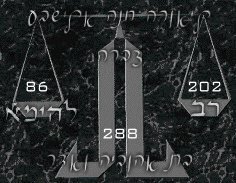
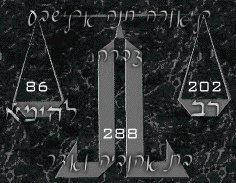
Redemptive Chesed. RaV (of seder Chesed) has a gematria of 202. Following the fall of the beit, through raising the letters of the Torah up one space, 202 sparks of holiness are also raised from the galut of mitzrayim. Tradition teaches us that each soul is born with a mission to redeem 288 fallen sparks of holiness entangled in and exiled throughout creation. Of these 288 sparks, 202 of them are specifically associated with the exile of mitzrayim. Thus, within the first flicker of my soul's experience in creation, is the redemptive power to raise these sparks.

Redemptive Gevurah. Having raised 202 sparks, 86 remain. Eighty-six is the gematria of Elo-him, Hashem's Name associated with creation, the sefirah Gevurah, the power to support and raise the fallen, and strict judgment. In the new RaV configuration of Bereshit 1:1 as written above, the Name Elo-him is transformed into the Name להימא . This Name also has a gematria of 86. Consequently, we can see that through this Name, להימא , the remaining 86 sparks scattered throughout creation are raised and redeemed. להימא is Holy Gevurah of Atzilut.

Tikun HaTohu. Elo-him אל-הים is from the 3-letter root הים meaning agitate or creating confusion. Confusion and agitation are created by the mem sofit, which represents hidden wisdom. When wisdom is hidden from and access is closed to the mind, the mind lacks clarity. להימא opens up the mem and channels wisdom and clarity into the mind. This is the tikun of Elo-him in the world of Tohu, from which all the lower worlds (Beriyah, Yetzirah and Assiyah) are derived.

Tikun HaBrit. Now, through להימא, the world of Tikun itself can be rectified and prepared to receive the great light of Tohu. Eighty-six is the gematria of the word וימל meaning "and he circumcised" [Bereshit 17:23]. This is the tikun of Elo-him in Beriyah.

Tikun HaAf. Eighty-six is also the gematria of האף meaning "surely" [Bereshit 18:13], for surely have I remembered, and surely Sarah laughs with the Name להימא. Surely remembering and laughing at the absurdity of it all, anger, אף [Shemot 4:14] is transformed into a measure of remembrance equal to all the mitzvot of the Torah. This is the tikun of Elo-him in Yetzirah, the world of the letter vav.

Tikun HaChemah, Sh'lim. With Elo-him and the world of Yetzirah rectified, the broken vav of shalom is restored to wholeness. Through restoration of vav, wrath חמה is transformed into a protecting wall, חומה.

Tikun HaShechinah, Tashuv Hey. The digit sum of all the letters constituting the newly configured Bereshit 1:1 is 5. Five is the value of the letter hey, representing the power of expression and complete teshuvah. This is the tikun of Elo-him in Assiyah and sweetens the 5 judgments in Malchut at their root. hamtakat hadinim beshorsham

Shem Chai. Each person has a spark of Mashiach, one's living name, one's shem chai שם חי. With the 4 letters of shem chai and the following 4 expressions, the 4th side of the letter beit is closed, restoring the power of redemption to wholeness in all 4 worlds, and drawing it down into all existence.

מ This is my name, ליאורה חנה אלישבע צברה בת אהוביה ואדר

ש this is my remembrance, ראשיתב ראא להימא תה שמימו אתה ארצו

י this is my hallel, רב

ח and this is my decree, להימא

making a vessel fit for (my spark of) Mashiach.

technorati tags:

Tuesday, December 13, 2005

Soul Of The Bat Kohen


On 11 Adar-1 5757, I formally returned to Torah with a mikveh immersion, and under the supervision of a Beit Din. During the reception ceremony following the immersion, I was blessed by the supervising Rabbi, a kohen, with the birkat kohanim (priestly blessing) concurrent with the laying on of hands upon my head (the posture of semichah). As the birkat kohanim is the third principle of hashra'ah (the immersive creative force of the Shechinah), clearly it took (as evidenced by the eruption of spiritual creativity since that time and documented, in part, by my website), unfolded, became enclothed (hitlavshut), evolved (hishtalshelut) and continues to evolve. Indeed, this testifies that I am indeed a true bat kohen - that my particular soul is of the supernal soul (supernal chesed) through which the creative blessing ably and truly erupts into manifest reality (asiyatic chesed).

Importantly, still carrying today the unblemished memory of my soul's origin, taken together with and supported by Niddah 30b (particularly the statement if thou keepest it in purity, it is well, otherwise it is taken from thee) testifies that my particular chesedic soul is of pure atzilutic origin kept pure (otherwise, I would have forgotten from whence I came). It further testifies that I am truly a ba'alat teshuvah returning to Torah (having learned Torah in the womb, as each soul of Israel does), as opposed to being a convert. In other words, I was born with this soul (consistent with my family tree as I later discovered; that in my case, it was passed to me matrilineally through my mother's mother's mother).

The birkat kohanim, a blessing of bestowal and infusion of the creative energy of the Shechinah, awakened and released my inborn potential to express it (the blessing and the curse of the bat kohen as described in Gemara Peshachim) in a powerful way (via the mystery of semichah). In my case, the first expressions birthed were surely chaotic, yet blooming from them comes evidenceof true mesirut nefesh - a physical birth in ignorance of my "Jewishness" in fulfillment of the divine will. In mastering the chaos of those first expressions, and through developing my website, comes keter shem tov, the crown of a good name - Akvah (see below). Moreover, that this all came about through an act of semichah (necessarily the act of a kohen tzedek, Sukah 52b) testifies that the Rabbi and I are nirtzah, even then, and that our deeds and prayers are acceptable to Hashem (Likutey Moharan 1).

Accepted favorably by Hashem, may the complete and final redemption speedily also come, in our day.

The bat kohen is also represented in manifest reality as Bat Sheva (described in Torah as tovat, by the letter tet), whose hidden reality is rooted in the divine name, Akvah, associated with the right side of da'at and with the priestly function to connect heaven and earth. This function is performed through the power to bear opposites with the aleph, which unites (a function of tet) the shin of this world with the shin of both the coming world and of the future to come with truth (emet, with a reduced value gematria of 9, bringing clarity into focus with 9 blasts of the shofar).

Lishmoa kol shofar v'emet.

This is the missing truth in the fishy story of Sefer Yonah (Yonah 4:2). The truth "missing" in Yonah 4:2 and revealed now is necessary for redemption (Shemot 34:6) of the yetzer hara (as opposed to mercifully abrogating judgment every year) and its transformation into the shepherd of complete and final redemption.

technorati tags:

Dare to be true to yourself.